Tag: science

LUCA

say hi to your daddy LUCA, the last common universal ancestor.

ONCE upon a time, 3 ga BP, there lived a single organism called LUCA. It was enormous, a mega-organism like none seen since, it filled the planet’s oceans before splitting into 3 and giving birth to the ancestors of all living things on Earth today.

by comparing their sequence of DNA letters, genes can be arranged in evolutionary family trees, a property that enabled Dr. Martin and his colleagues to assign the 6m genes to a much smaller number of gene families. Of these, only 355 met their criteria for having probably originated in Luca, the joint ancestor of bacteria and archaea. The 355 genes pointed quite precisely to an organism that lived in the conditions found in deep sea vents, the gassy, metal-laden, intensely hot plumes caused by seawater interacting with magma erupting through the ocean floor. Dr. Sutherland too gave little credence to the argument that Luca might lie in some gray transition zone between nonlife and life just because it depended on its environment for some essential components. “It’s like saying I’m 50% alive because I depend on my local supermarket.”

2024-07-23: Molecular Adam and Eve

These 2 proteins, emerging as mirror images from the same gene, form the foundation of all subsequent encoded proteins. Given their central role in the inception of the genetic code—perhaps the most critical moment in the origin of life—Carter named them Αδάμ and Εωε (Adam and Eve, in Greek characters). Their existence underscores a fundamental principle: a code can only arise when there are at least two options to choose from.

Through the pioneering biochemical experiments conducted by the Carter laboratory, it was revealed that molecular Adam and Eve exhibited distinct specificities towards different groups of amino acids. This specialization allowed them to carry out an initial, albeit rudimentary, production of proteins (themselves), marking a significant advance over random synthesis. Over millions of years of evolution, these 2 proteins each diversified into 10 distinct forms. The fact that the symmetry was maintained between the two classes suggests that they were still part of bidirectional genes as they coevolved. The diversification process mirrored the complexity of the genetic code itself: the incorporation of new amino acids led to the addition of new codons, and at the same time allowed the synthetases to become more accurate at decoding genetic information. This cycle of coevolution between the code and its interpreters elegantly exemplifies how a code can be refined by the very entities it generates.

Molecular biology class

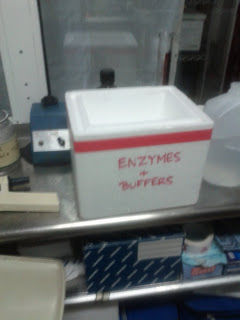
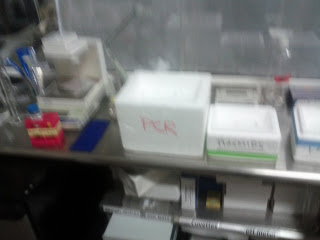
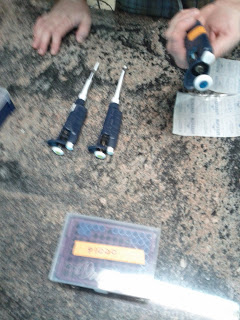
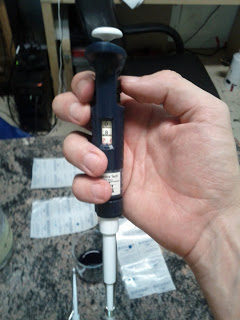
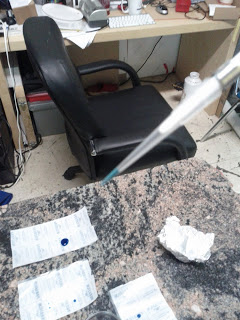
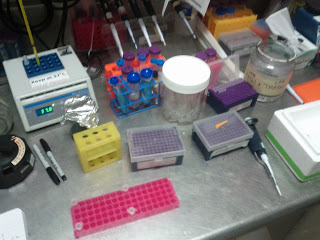
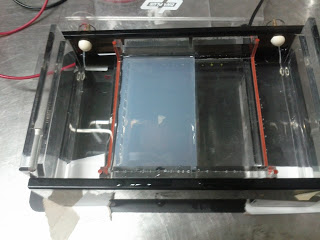
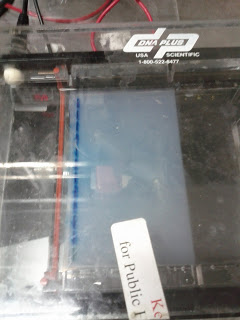
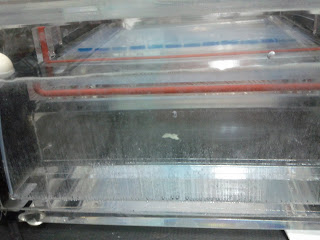
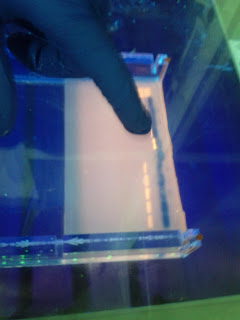
we are making a banana smell generator. the first steps were to clone the necessary genes so we can later splice them into the host yeast. the cloning uses PCR via a thermal cycler. we then check the results of the cloning using gel electrophoresis. this also serves to separate the cloned genes from others in the solution: since molecules of different weight travel at different speeds in the gel. you can just cut the gel into stripes to isolate the molecule you want.

Gardening at scale


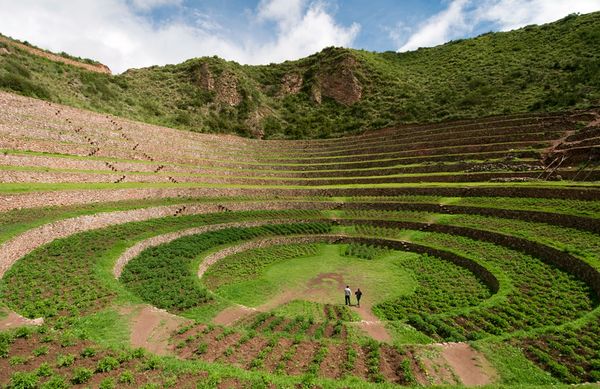
Large-scale agricultural experimentation by the incas, and how similar designs could be used to affect climate on a continental scale. There are some theories that this is exactly what happened in the amazon basin:

“Anthropologists now believe that the majority of the Amazon rain forest was managed by humans. There are many fruit and nut bearing trees in the Amazon, and this was probably due to human interference. They also used a unique form of burning in the Amazon, where they would stop the fields from completely burning so that there would be charcoal. Turns out the active carbon in charcoal bonds to organic elements and makes the soil as good or probably better than using fertilizer.” (from the excellent 1491 by Charles Mann)

The amazon basin has been terraformed on a large scale as far back as 2500 BP, supporting a population of 8M by the time the spaniards showed up in 1492. After that, it of course crashed.
2020-04-11: The large scale cultivation goes back much further.

We show that, starting at around 10 ka BP, inhabitants of this region began to create a landscape that ultimately comprised 4700 artificial forest islands within a treeless, seasonally flooded savannah. Our results confirm that humans have markedly altered the landscape ever since their arrival in Amazonia.

2022-06-02: Amazonian cities

Starting 1.5 ka BP, ancient Amazonians built and lived in densely populated centers, featuring 22m earthen pyramids and encircled by kilometres of elevated roadways. 2 of the urban centers each covered an area of more than 100 hectares — 3x the size of Vatican City. The lidar images revealed walled compounds with broad terraces rising 6m above ground. On one end of the terraces stood conical pyramids made of earth. People likely lived in the areas around the terraces and travelled along the causeways connecting the sites to one another. Lidar images found reservoirs in the settlements, perhaps indicating that this part of the world wasn’t always wet — an environmental shift that might have driven people away. But then again, steady pollen records reveal that maize was grown in the area continuously for 1000s of years, indicating sustainable agricultural practices.

Steel

Homemade steel

“From Dust to Edge” is the documentation of a long journey in the efforts of making a blade out of homemade steel.

Henri Bergius this sounds up your alley. I don’t think my landlord will go for it but there is plenty of space in the finnish woods for a project like this.
2015-02-17: Nanolaminated steel

the Modumetal process can increase the strength of metals such as steel by as much as 10x. Modumetal uses an advanced form of electroplating, a process already used to make the chrome plating you might see on the engine and exhaust pipes of a motorcycle. Electroplating involves immersing a metal part in a chemical bath containing various metal ions, and then applying an electrical current to cause those ions to form a metal coating.

2021-02-07: 20% less energy

Boston Metal’s process will use 20% less energy than a conventional blast furnace. And if the facility can use cheap, plentiful renewable electricity, perhaps from a hydropower plant, its steel would cost less than the competition. “At scale, we expect to make better metal at lower cost and with no CO2 emissions

2021-11-05: Volvo deployment

Steelmaking is currently extremely CO2 intensive, accounting for about 7% of total global greenhouse gas emissions. As we continue to use ever more steel for new infrastructure around the world, the task of decarbonizing the industry is growing ever more urgent. Hydrogen can now perform that task and Volvo has just taken delivery of the first consignment of CO2-free steel.

2023-02-23: Nice overview of the history of steel production

Blast furnaces continue to be constructed around the world, particularly in China, which now produces more steel than the rest of the world combined. For the foreseeable future, recycling steel scrap won’t be sufficient to supply the world’s need for iron, and we’ll continue to need iron ore based methods of steelmaking. But blast furnaces, like cement plants, have the unfortunate distinction of producing CO2 as a fundamental part of the process: a blast furnace is essentially a machine that turns iron oxide and carbon into iron and CO2.
Direct reduction with CO still produces CO2, but direct reduction with hydrogen only produces water as a byproduct. “Green steel” efforts are thus often centered around finding low-carbon ways to produce hydrogen to use in the direct reduction process. Of the 72 green steel projects listed on this “green steel tracker,” 49 of them involve low CO2 hydrogen production, mostly either “green” hydrogen made via electrolysis or “blue” hydrogen made from natural gas plus CO2 capture.

2023-02-24: Blast furnace retrofit upgrade

It replaces 90% of the coke used in the blast furnace with direct CO injection. The CO comes from a system that captures and recycles the furnace’s own exhaust “top gas,” separating out CO, CO2, hydrogen and nitrogen gases at high temperatures. These gases are then sent through a twin-reactor redox system that keeps the carbon inside a closed loop. Retrofitting this thermochemical redox system to existing BF-BOF steel plants should make it notably cheaper to produce steel. And emissions would be slashed by 94%.
“The system we are proposing can be retrofitted to existing plants, which reduces the risk of stranded assets, and both the reduction in CO2, and the cost savings, are seen immediately.”