this is so wonderful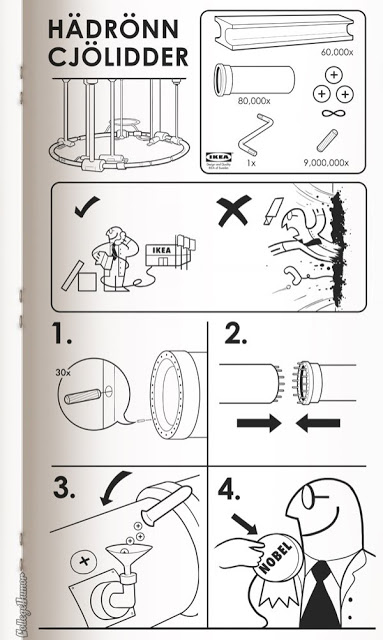
Tag: science
Non-frivolous crowdfunding
Petridish lets you fund promising research projects and join first hand in new discoveries. World famous researchers post projects and expeditions that need your help to get off the ground. Each project has a minimum threshold it must hit in pledges, or it will not be funded. Backers in successful projects join the team and get insider rewards such as: Early access to news about progress and findings, souvenirs from the field, acknowledgements in journals, naming rights for new discoveries, or the ability to join an expedition in person.
a kickstarter for actually useful science instead of “films”.
The Heart with no Pulse
Reger and the Central American patient proved that humans could survive, indeed thrive, with no pulse.
dispatches from the making sense of a exponential world.
Making Stargates
someone had some fun with this paper.
Enclose a few 1000 KG of matter within another thin shell of matter wherein we can change its mass from positive to negative. It would have to become sufficiently negative to null the positive mass of the initial mass of the shell and the matter it encloses. This would screen the gravitational influence of the matter in the rest of the universe on the matter within the thin shell.
Screen our electron from the gravitational potential due to the rest of the universe, the denominator would become of order unity and the exotic bare mass of the electron – 21 orders of magnitude larger than its normal mass and negative – would be exposed. Do this to a modest amount of normal stuff and you would have your Jupiter mass of exotic matter to make a traversable stargate – if the negative bare mass ADM model of elementary particles is a plausible representation of reality.
the crucial breakthrough is to reduce the mass-energy needed for a warp field from jupiter (10E27 kg) to voyager 1 mass-energy (10E3 kg).
Time Crystals

Sounds like the plot line from schlocky sf. And then there is this:
It may be possible to exploit time crystals to perform computations using 0 energy. It is interesting to speculate that a quantum mechanical system whose states could be interpreted as a collection of qubits, could be engineered to traverse a programmed landscape of structured states in Hilbert space over time.
2017-01-27: New paper by Norman Yao
If crystals have an atomic structure that repeats in space, like the carbon lattice of a diamond, why can’t crystals also have a structure that repeats in time? That is, a time crystal?
In a paper, he describes exactly how to make and measure the properties of such a crystal, and even predicts what the various phases surrounding the time crystal should be — akin to the liquid and gas phases of ice.
This is not mere speculation. 2 groups have already created the first-ever time crystals, using 2 totally different setups.
2021-08-06: They’re real.
Time crystals illuminate something profound about the nature of time. “However much you try to treat [time] as being just another dimension, it is always kind of an outlier.” Einstein made the best attempt at unification, weaving 3D space together with time into a 4D fabric: space-time. But even in his theory, unidirectional time is unique. With time crystals,, “this is the first case that I know of where all of a sudden time is just 1 of the gang.”
Depressing suburbia
Finally, a scientific explanation for the feeling of depression I get from suburban environments dominated by Applebee’s, OfficeMax and 8-lane thoroughfares. Urban design can have a measurable effect on how people feel. Researchers examined levels of self-reported happiness in 10 major cities. Quality urban environments do indeed contribute to happiness among residents.
“People are often connected to quality places that are cultural and distinctive. Not all neighborhoods are the same. Some are designed and built to foster or enable connections. Other are built to discourage them (e.g., a gated model) or devolve to become places that are antisocial because of crime or other negative behaviors.”
Death to suburbia. I have nothing against truly rural communities, it is the sea of despair and mediocrity in between that is the problem.
2012-07-13: I have said as much for 10 years
Nearly everything that these families had striven for — material possessions, good jobs, extracurricular enrichment for their kids — made them wholly miserable.
Dog domestication
Canines have had 36 ka to co-evolve with humans. Plenty of time for canines to domesticate humans as a food source, mainly via the cunning puppy dog eyes.
2012-12-06: How to make dogs from foxes in 8 generations (and “dragons” from foxes)
2018-12-15: This fictionalization of the domestication of wolves was surprisingly good.
2020-06-06: Foxes becoming dog-like
When the foxes moved from the forest to city habitats, they began to evolve doglike traits, potentially setting themselves on the path to domestication.
2022-02-08: Dog / Human co-domestication
Based on claims that dogs are less aggressive and show more sophisticated socio-cognitive skills compared with wolves, dog domestication has been invoked to support the idea that humans underwent a similar ‘self-domestication’ process. Dogs do not show increased socio-cognitive skills and they are not less aggressive than wolves. Rather, compared with wolves, dogs seek to avoid conflicts, specifically with higher ranking conspecifics and humans, and might have an increased inclination to follow rules, making them amenable social partners. These conclusions challenge the suitability of dog domestication as a model for human social evolution and suggest that dogs need to be acknowledged as animals adapted to a specific socio-ecological niche as well as being shaped by human selection for specific traits.
77 ka Mattresses
the bed bugs problem was taken care of by burning the place to the ground, for 44 ka.
A team of archaeologists has discovered 40 ka worth of mattresses stacked in South Africa’s Sibudu cave, 40 km north of Durban. Our Stone Age ancestors made bedding from leaves, seeds and stems of local rushes and grasses on the floor of the cave starting 77 ka ago. For the next 44 ka, nomadic Homo sapiens hunted and gathered in the area using Sibudu as their crash pad, compacting the plant material to create sleeping mats.
Science of 2021
A very optimistic view at the science of 2021. Still, some of these things will come to pass. a good antidote to all the nonsense going on in the world.
Decrypting the Brain: modeling the complex mind
Hacking Space: public and private access spurs a new space age
Massively Multiplayer Data: human-data interaction emerges as a core discipline
Sea the Future: oceans become the new frontier for energy, ecology, and engineering
Strange Matter: unnatural materials reshape our world
Engineered Evolution: manipulating biology from the bottom up
Dolphin Language
the first identified word was jerks.
Researchers in the United States and Great Britain have made a significant breakthrough in deciphering dolphin language in which a series of 8 objects have been sonically identified by dolphins. Team leader, Jack Kassewitz of SpeakDolphin.com, ‘spoke’ to dolphins with the dolphin’s own sound picture words. Dolphins in 2 separate research centers understood the words, presenting convincing evidence that dolphins employ a universal “sono-pictorial” language of communication.
see also
Marine biologists have connected 2 dolphin research habitats with underwater microphones and speakers. They hope the chat line will enable a dolphin calf to learn to “talk” by communicating with dolphins in the other facility.
Uplift Universe is required context for this talk. in particular: Neo-Dolphins
If the dolphins engaged in meaningful communication with near-human complexity, the frequency of these sounds would yield a logarithmic slope of -1—just like most human languages. Dolphin recordings had a gradient of -.95. This suggests that “dolphinese” may exhibit syntax. In comparison, the squirrel monkeys’ Zipf slope was never lower than -0.6, meaning the signals were too random to exhibit syntax. The cotton plant, which communicates through chemical emissions, had a signal distribution slope closer to -1.6, meaning the signals were too redundant.
 Gregor J. Rothfuss