Late last week, Michael sent out our proposal to donate the wyona code base (renamed lenya) to apache. it has been a very interesting discussion since, and so far it is looking good. in any event, it feels great to enter a new community.
2003-04-08: This Thursday and Friday (April 10th and 11th), Michael and I will be at the office of Q42 in Den Haag. We will do a “Lenya Mini Sprint” there and the guys from Q42 will help us improve the Lenya User Interface. what is a sprint? We will also try to integrate Xopus 2.0.0.8 (which was the last Open Source version) and try to integrate their newest Xopus version (which is not Open Source). At the end of Friday there will be a reception at Q42’s office. Please let us know if you want to meet us in Den Haag or join the party on Friday night.
2004-04-25: the apache lenya community is organizing a sprint on may 14 and 15 in zurich, switzerland. we will focus on repository integration, but people with other interests are also welcome, of course. please sign up on the wiki (and watch the wiki for updates) if you would like to attend.
2003-04-11: just received word that the university of reunion will be using Apache Lenya for their site. here is an offer: pay for the flight and accommodation, and i will help setting up Apache Lenya 🙂

2003-05-13: turns out my work for the past couple weeks has been totally in vain. what started as (yet another) attempt to write a “clean” publication for apache lenya resulted in another publication with hacks. in retrospect, DOH of course, because each publication has its quirks that you only run into when you develop it. the time would have been much better spent tightening up the existing code base. instead, we broke code that was working perfectly with stupid changes, like changing the root element of aggregates. i have no one to blame but myself for this, but i will make damn sure we don’t waste any more time like this. i wonder why software “engineering” has to be so painful. we need a regimen that is more focussed on the bottom line to do away with such nonsense.
2003-05-23: i’m reading through the Apache mirroring FAQ today to figure out how to do a release. i’m pretty excited, luck permitting, Apache Lenya 1.0rc1 should hit the mirrors later today.
update. we are live.
2003-05-27: here is my newest try at shaping up my marketese speak. some gems:
- content delivery
- technologists
- preeminent platform
- future-proof
2003-06-12: son-of unipublic. this is (to my knowledge) the first independent deployment of apache lenya. very cool. now, when is their opening party?


2003-07-28:
U src/webapp/lenya/pubs/default/lenya/xslt/authoring/create.xsl

failed due to an internal error (took 0:18.754)
it’s high time for CVS to roll over and die. it’s numerous deficiencies are beginning to seriously piss me off.
2003-09-10: bill humphries is just demoing the apple intranet. it is based heavily on PHP and uses the concept of page envelope we came up with for lenya. very cool stuff.
2003-09-20: michael and myself paid a visit to bill at apple today to demo lenya. unfortunately i was not allowed to take pictures on the campus.
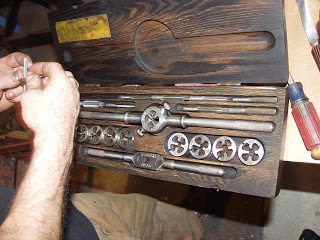
2003-11-15: i’m tooling away in las vegas, at the apachecon hackathon, trying to get apache lenya 1.2 out the door. meanwhile, my landlord is having fun with tools of his own. too much fun.

2003-11-28:
NZZ Online and Computerworld are 2 out of the 3 winners of the SiteAngel Trophy, a benchmark comparing performance and availability of swiss media websites. Both web sites are built on Apache Lenya, the open source Content Management System (CMS) originally developed by Wyona Inc. the leading swiss specialist for open source CMS.
computerworld was my first project at wyona.
2003-12-22: michi will represent lenya on a panel at iex that also features representatives from day, interwoven, obtree and red dot. michi will also be speaking at a pre-conference open source forum.
2004-01-30: i want to bring these 2 interesting workshops to your attention. They will be held on Wednesday, February 18 at University of Berne as part of the LOTS (Let’s Open the Source) event. Registration is open until February 16th
Supersonic Tour of Apache Cocoon
Speaker: Bertrand Delacretaz
This fast-paced tutorial gives a quick overview of the Apache Cocoon web applications framework, with a more detailed view of the more mainstream components of this framework: the multi-channel publishing subsystem, the Flow layer and the Cocoon Forms (aka Woody) components. By studying the inner workings of example pipelines and small applications, we will learn how to combine these components to take advantage of the massive amount of functionality offered by Apache Cocoon’s rich set of components.
Focused samples will help us understand what goes where and which components must be studied to be productive with Apache Cocoon.
Attendees are welcome to bring their laptops with the latest release of Apache Cocoon installed, for hands-on exploration during the tutorial, but the packed agenda does not allow for any help with installation problems during the presentation.
Apache Lenya Workshop
Speakers: Gregor J. Rothfuss, Andreas Hartmann
Wyona AG
Familiarize yourself with the features and architecture of Apache Lenya, the Content Management System from the Apache Software Foundation. The workshop will outline functionality by demonstrating projects (University of Zurich, NZZ) that were built using Apache Lenya. An architectural overview, building on Apache Cocoon (which is covered in a separate workshop) will be followed by lessons learned from our customer projects. Participants will learn valuable lessons for content acquisition, content architecture and cms customization, and there will be plenty of time to ask questions. The duration of the workshop is 3.5 hours.
2004-03-21: i’m always learning about new cool tools that ship with cocoon. today, i had a look at the instrumentation support. it allows you to analyze runtime behavior of lenya to spot troublesome areas. you can check memory usage, objects in cache, and many more.
2004-04-11: apache lenya now supports i18n, and conversely, we are accepting translations for the user interface. i am wondering if these should eventually go into their own repository? if the xaraya project is any indication, translations can quickly outgrow the code (in numbers of files.) openlogging reports that the xaraya translations repository is now the second largest bitkeeper repository, larger than the linux kernel. scary. 🙂
2004-05-11:
| Cofax |
|
 1% (3) 1% (3) |
| DBPrism |
|
0% (1) |
| Lenya |
|
23% (40) |
| Magnolia |
|
18% (31) |
| MMBase |
|
1% (3) |
| Nukes |
|
6% (11) |
| OpenCMS |
|
7% (12) |
| RedHat CCM |
|
0% (1) |
| Slide |
|
2% (4) |
| Other (please comment) |
|
2% (4) |
| Don’t know, I’ve never used any of them! |
|
25% (43) |
| OpenEdit |
|
2% (4) |
| InfoGlue |
|
7% (12) |
2004-06-07: it’s nice to get press even if it is not as clued-in as it could be:
Version 2.1.5 fixes numerous issues with the framework and is available for Unix and Windows environments. Stefano Mazzocchi who just last week was elected to the Apache Software Foundation’s Board of Directors, suggests that v2.1.5 is the most stable version yet released. In general, the community touts Cocoon’s XML framework as the “Web glue for your Web application development needs.” 1 of the direct Apache Cocoon sponsored projects, currently in incubation (not a fully ASF supported project) that relies on Cocoon is a Web content management system known as Lenya. The latest Cocoon release fixes at least 1 critical bug that will make Lenya more functional, according to Lenya committer Gregor Rothfuss. “We were quite happy to see it resolved”. The next Lenya CMS release is scheduled for release in the next 2 weeks.
you heard it, people. lenya 1.2 should be out soon 🙂
2004-08-03: with that start of the olympics, it’s a good time to mention that the national olympic committee of afghanistan runs on lenya.
2004-09-23: The board of the Apache Software Foundation passed the resolution to make Apache Lenya a top-level project.
2004-11-22: There will be a boston cocoon / lenya user group meeting on december 9th at 6PM, location to be determined. i will be speaking about creating print on demand solutions with cocoon. bring your friends, and check back at the wiki for more information.
2004-12-01: received the following email in the lenya developer mailing list moderation queue today:
Dear Lenya,
I am a researcher here at Vault, the career information company, and I believe that you work at Apache. I am contacting you to invite you to share your thoughts on corporate culture, recruiting, and other career topics at Apache (or another current/former employer) by filling out this brief anonymous online survey
2005-03-31: there is now a cocoon meetup group for cambridge. if you have an interest in apache cocoon or apache lenya, sign up to be informed about events in the boston area.
2005-05-21: the ASF now offers a solaris 10 zone to each pmc. not wanting to pass on a great opportunity to test drive it, i set up a lenya demo on our zone. i haven’t had a lot of time to explore yet, but some first impressions are in order: it looks like solaris 10 has a more reasonable selection of software installed, but the root shell still defaults to one that does not handle arrow keys, or sensible tab completion.. what’s up with that? i look forward most to exploring dtrace, especially in conjunction with java.
2005-06-02: The Apache Software Foundation is a proud partner of the Google Summer of Code initiative. The Summer of Code is a program designed to introduce students to the world of Open Source Software Development and provide them with a $4500 award for completing an Open Source project before the end of Summer. The Apache Lenya project currently has 3 project proposals as part of the Summer of Code, more may be added later. For details see
Overhaul search facilities
Implement editor API
Implement workflow queries
The deadline for application is June 14th so if you are interested you need act quickly. Competition is very high for these projects, but then so are the rewards. If you would like to create a proposal for any of the above then we need to follow the following process:
- student gains an overview understanding of the technologies involved in the proposal
- student expands the initial project outline to a draft proposal text:
- description of problem
- description of a proposed solution
- benefits of the solution to the Apache community
- an approach
- milestones in delivery
- expected timeline for delivery
- description of relevant students skills
- student and mentors work together to finalize this proposal
- proposal is submitted to project community for comment/approval
- student registers the proposal with Google via their website
The Apache Lenya Team
2005-06-03: apache lenya contributor jonathan linczak was interviewed by the web standards project about his experience in implementing a standards-based site. jon is responsible for the new fully CSS-based menu in the upcoming 1.2.4 release, and has written many tutorials. people like jon really unleash the standards-based goodness inside lenya, and it’s nice to see recognition for that.
2005-06-09: Apache Lenya now has WebDAV integration, thanks to a patch by Doug Chestnut.

2006-01-26: Kudos to my former colleagues at wyona for landing wired as a customer for apache lenya. While it would of course have been nice if this had happened on my watch as COO, it’s still satisfying to know that my laying the groundwork led to such outcomes.
2006-11-01: BeCompany, a new apache lenya systems integrator.
2007-06-19: welcome to radical transparency. eventually, you’ll be able to see this sort of graph (Apache Lenya Top 10 Committers) for every working person in the world. looking busy while doing nothing is on the way out.


 Gregor J. Rothfuss