
Tag: space
Jupiter

Jupiter is in the news again, this time because its “Baby Red Spot” – a storm less than 1 year old – appears to have been swallowed up by the massive storm known as the Great Red Spot. This is good occasion to share some of the best photographs of Jupiter and its larger system of rings and moons, as seen by various probes and telescopes over the past 30 years.
2012-10-29: Meanwhile, Jupiter has a hurricane 3x the size of earth that has been going on since observation began 400 years ago, and likely much longer.
2015-03-28: What keeps the Spot together physically?
I am speculating that the Red Spot is, from top to bottom, 50-70 kilometers tall. From side to side, it’s 26k kilometers. So it’s a pancake. Just like with a tube of toothpaste, if I squish the pancake with high pressure at its center, something is going to squirt out the sides and top and bottom. It’s known that the Great Red Spot has a high pressure at its center, but its gases don’t go squirting out horizontally from its sides because of the Coriolis force in those directions—instead they squirt out vertically from the top and bottom. So, what can prevent the gases from squirting out vertically? The only way that I know to prevent that is if the top of the Great Red Spot has a dense cold lid of atmosphere above it. It’s that extra density that pushes the gases in the Great Red Spot back down. And, below the Great Red Spot, there must be a warm buoyant floor of atmosphere, and that floor prevents the high pressure center from pushing the gases in the Great Red Spot downward and out its bottom. That’s the balance.
2018-01-31: Nice!
Launched in 2011, NASA’s Juno mission to Jupiter arrived in mid-2016, and the spacecraft maneuvered into a 53 day orbit around the gas giant. The JunoCam imaging instrument, 1 of 9 scientific instruments on board, has been returning red, green, and blue filtered images of Jupiter to Earth, and NASA is encouraging anyone to download, process, and share them. Citizen scientists like Seán Doran and Gerald Eichstädt have been finessing these images,—enhancing the existing contrasts and boosting the colors to create really amazing views of our solar system’s largest planet. Cloudtops pop into view, swirls and structure and depth become more apparent, and the enormous roiling atmosphere seems almost within grasp.


2019-05-20: And now the red spot is changing:
Around the world, amateur astronomers are monitoring a strange phenomenon on the verge of Jupiter’s Great Red Spot (GRS). The giant storm appears to be unraveling. “I haven’t seen this before in my 17-or-so years of imaging Jupiter
2022-07-25: JWST has a nice picture of Jupiter’s ring. This was news to me.
Astronomers know that Jupiter’s upper atmosphere is 100s of degrees hotter than the lower atmosphere, but they aren’t sure why. By detecting infrared light, JWST could see the heated upper atmosphere shining; it appears as a red ring around the planet. “We have this layer a few 100 kilometers above the cloud decks, and it’s glowing because it’s hot. We’ve never seen it like this before on a global scale. That’s an extraordinary thing to see.”
Also visible are Jupiter’s thin ring and its icy moon Europa shining brightly on the left. A small atmospheric disturbance, visible on the planet’s bottom edge, is caused by an interaction with the volcanic moon Io.

Meteoritic Nucleobases
“We believe early life may have adopted nucleobases from meteoritic fragments for use in genetic coding which enabled them to pass on their successful features to subsequent generations.”
panspermia is kinda stupid considering that all elements were formed in star furnaces.
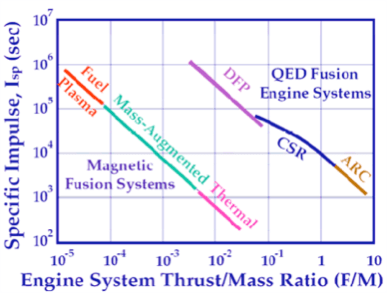
Fusion propulsion
1200 people on Mars for the cost of a few Apollo landings
The path forward is to use regenerative (breeding) of isotopes that emit more protons for positron emissions. This regenerative approach will enable full scale antimatter catalyzed deuterium fusion propulsion. The Deuterium fusion propulsion will be able to achieve performance like other deuterium fusion rocket designs which is up to 10% of lightspeed and 100K+ ISP to millions of ISP
The Sky, From Above

One of the best features of the space program has always been astronaut photography, and I will take this opportunity to share some of the best photographs of Earth’s skies, taken from above – way above
this made me mist up.
Mercury

nicely high res
2011-03-29: very baked indeed
Virgle
For 1000s of years, the human race has spread out across the Earth, scaling mountains and plying the oceans, planting crops and building highways, raising skyscrapers and atmospheric CO2 levels, and observing, with tremendous and unflagging enthusiasm, the Biblical injunction to be fruitful and multiply across our world’s every last nook, cranny and subdivision. An invitation. Earth has issues, and it’s time humanity got started on a Plan B. So, starting in 2014, Virgin founder Richard Branson and Google co-founders Larry Page and Sergey Brin will be leading 100s of users on one of the grandest adventures in human history: Project Virgle, the first permanent human colony on Mars.
how many years before this is not a prank anymore.
Naked-Eye GRB
GRB 080319B’s optical afterglow was 2.5m times more luminous than the most luminous supernova ever recorded, making it the most intrinsically bright object ever observed by humans in the universe. A redshift of 0.94 translates into a distance of 7.5b light years.
Blowing up a Satellite
A Navy missile blasted a dying spy satellite just above the atmosphere. it looks like the military’s stated goal, of busting up the satellite’s tank full of toxic hydrazine, was reached.
San Marino Scale
The San Marino Scale is an attempt to quantify the potential impact of active SETI, that is, transmitting signals into space from Earth. Arecibo Message: targeting M13, 25K LY from earth. The message outshone the Sun by 10e5. The authors assign it a San Marino score of 8, ranking it as ‘far-reaching’ on the scale.
 Gregor J. Rothfuss