Tag: sna

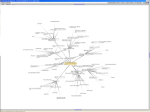
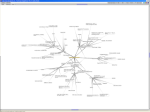
Homer social network

So homer checks out from a social network analysis perspective, how about that other fable, the bible? Anyone?

We managed to build and analyze a social network gathered across the classical epic, Odyssey of Homer. Longing for further understanding, topological quantities were collected in order to classify its social network qualitatively into real or fictional. It turns out that most of the found properties belong to real social networks besides assortativity and giant component’s size. In order to test the network’s possibilities to be real, we removed some mythological members that could imprint a fictional aspect on the network. Carrying on this maneuver the modified social network resulted on assortative mixing and reduction of the giant component, as expected for real social networks. Overall, we observe that Odyssey might be an amalgam of fictional elements plus real based human relations, which corroborates other author’s findings for Iliad and archaeological evidences.

The same thing is true for viking sagas:

Njal’s Saga has an average of 4 new characters every page. Whereas modern fiction tries to make sure you can keep track of everyone, with the exception of maybe Game of Thrones. That density of characters, and the realism of their networks, suggest a different purpose for literature than might be the case now — the creation of portraits of societies, rather than portraits of individuals.

Transformative Approaches Project

When dealing with networks consisting of 1000s of entities and relationships, it is extremely difficult for an editor to detect redundant links. Routines can be designed to analyze the network around an anchor point for different types of redundancy, but the results to date have proved difficult to interpret because they cannot as yet be related to a visual map.

3.1 Network analysis (text)
An increasing number of applications of graph theory have emerged in the social sciences. GRADAP is an especially powerful package for the definition and analysis of large networks of social entities. Many other packages exist but few are able to handle more than a few 100 nodes or relationships between them. Like all of them, however GRADAP offers no means of actually mapping the networks in a visually comprehensible form. The results are presented as indicators or tables.

3.2 Identification of vicious and serendipitous loops (text)
There has long been recognition of how one problem can aggravate another and of how several problems can reinforce each other. There has been no attempt to identify systematically the existence of vicious loops or cycles through which 4 or more problems constantly reinforce one another. A computer program has been developed to explore the many pathways amongst the world problems documented in this Encyclopedia and isolate such loops. This suggests the possibility of moving from a focus on problems as though they were isolated, of which few are, to one in which the focus is on the many vicious loops of which a problem may be a member. See also examples of loops.

3.3 Q-Analysis (text)
This technique gives precision to understanding of the challenges of comprehensibility amongst communities of people or organizations. Specifically it shows how more complex patterns of understanding, or concepts of greater complexity, can only be communicated with great difficulty by losing important dimensions, or not at all, through certain patterns of relationship. It demonstrates how complex messages can only be usefully communicated through communication channels that can handle such complexity. In the absence of adequate channels, complex notions do not “travel well”. It raises the question of how to design communication networks adequate to integrative communications of any kind.

if i understand this correctly, this is a list of approaches to cope with societal challenges (ala engelbarts intelligence augmentation)

Enterprise Social Analytics

We leave a trail of breadcrumbs with every enterprise search query, request for information from a colleague, email, or other declaration. Who are we talking to, about what? Who are the smartest people in the company, and who are the most helpful? where are groups that agree with the strategy, and are acting accordingly by sharing relevant content? In an information economy people are the real life-blood. Information is only as valuable as the network it supports. But how do you follow the breadcrumbs we find in our system logs?

IBM has discovered SNA