now so accurate that they have to be placed at a known height relative to the earth’s geoid, in order to accommodate the influence of gravity on time.
Tag: science
Procrastination
merely thinking about the task in more concrete, specific terms makes it feel like it should be completed sooner and thus reducing procrastination.
2019-03-25: Emotion regulation
Procrastination is an emotion regulation problem, not a time management problem
Kepler mission
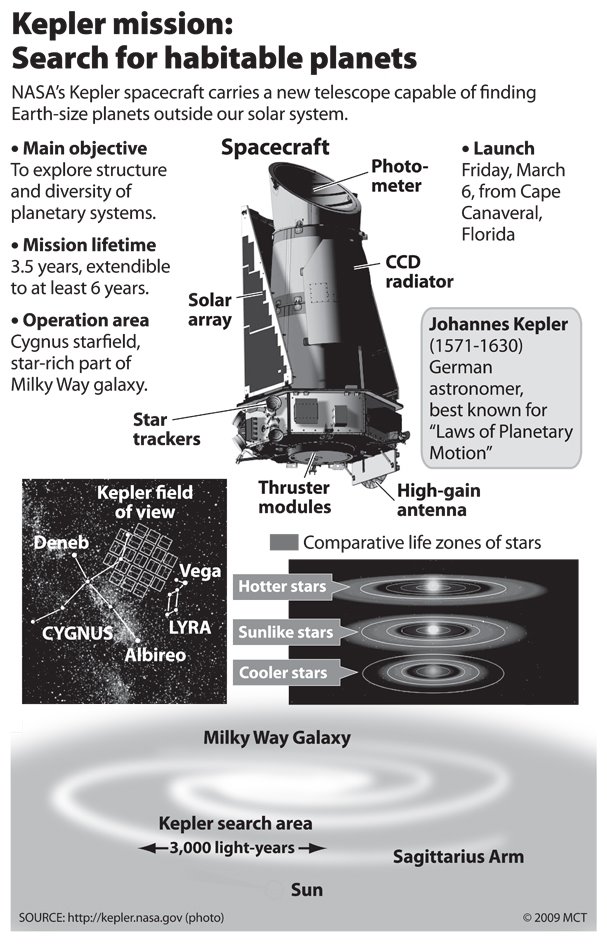
Launched today. Will search an area of 3000 light years in our neighbor arm, the sagittarius arm, for earth-like planets. Expected haul, 500.
2010-07-26: After finding more planets in the first year of the Kepler mission than all previous efforts combined: “earth-sized planets are common in the galaxy”
2011-02-01: Transit requires the right inclination for detection, and is quite unlikely, which means there should be 10k as many planets out there than they found. about 12M.
2013-11-23: Using a solar sail approach. Clever
NASA outlines ingenious plan to resurrect the Kepler planet hunter. “K2” mission would use its solar panels as a pointing device.
2015-12-15: Really awesome visualization about all the solar systems yet discovered.
2021-10-27: The final haul was 2662.
Ed Boyden
Boyden directs MIT’s Neuroengineering and Neuromedia Lab, part of the MIT Media Lab. He explains the mission of neuroengineering this way: “If we take seriously the idea that our minds are implemented in the circuits of our brains, then it becomes a top priority to understand how to engineer brains for the better…”
2019-04-10:
Are we less creative if all the parts of our mind become allies? Maybe I’m afraid this will happen to me, that I have rebellious parts of my mind, and they force me to do more interesting things, or they introduce randomness or variety into my life. BOYDEN: This is a question that I think is going to become more and more urgent as neurotechnology advances. Already there are questions about attention-focusing drugs like Ritalin or Adderall. Maybe they make people more focused, but are you sacrificing some of the wandering and creativity that might exist in the brain and be very important for not only personal productivity but the future of humanity?
Paleogenetics
We recently put together a DNA sequence for the earliest mammal genome, 75 ma old. The cool thing is that you can get a lot of information about ancestral genomes just by crunching probabilities — even if you don’t have any fossils, or mosquitos-trapped-in-amber, or time machines, or whatever.
2008-11-20: Scientists are also reactivating a disabled virus in human DNA after millions of years. Welcome to Paleovirology. And crappy michael crichton novels, probably. And you can take it further to Paleo‐metagenomics:
Surviving fragments of genetic material preserved in sediments allow metagenomics researchers to see the full diversity of past life — even microbes.
2014-02-14: The largest unwritten story is ~200 ka of prehistory. We’ll write the major outlines of it in the next 100 years.
Genetic data identified over 100 events occurring over the past 4 ka: the Mongol empire, Arab slave trade, Bantu expansion, European colonialism, as well as unrecorded events, revealing admixture to be an almost universal force shaping human populations
2014-03-27: Amazing overview from the guy who sequenced neanderthals and denovisans, including recent research into FOXP2, the language gene.
2015-06-16: (long) overview of the state of genetics in prehistory
By the middle years of the 2000s researchers had gone back to a focus on recombining autosomal markers. But now they had a whole human genome to compare it to, as well as SNP-chips which quickly yielded large troves of data with little effort. In 2008 a paper was published which took the origin HGDP data set collected by Cavalli-Sforza and his colleagues, and utilized the new technologies to make deeper inferences. First, instead of 100s of markers you had 650k SNPs. Second, the emergence of powerful new analytic and computational resources allowed for the complemention of tree-based and PCA visualizations of genetic relationship with model-based understandings of genetic variation and population structure. By “model-based,” I mean that the algorithm posits particular parameters (e.g., “3 ancestral populations”) and operates upon the data (e.g., “650k SNPs in 1000 individuals”) , to generate results which are the best representation of the fit of the data to the model. This different from PCA, which has fewer assumptions, and represents genetic variation geometrically (each axis represents an independent dimension of variation within the data). Model-based clustering is very clear and aesthetically appealing. It gives precise results. But, the model itself is not necessarily right.
2015-09-15: A perspective
Ancient genomics is a powerful tool for the study of prehistory, but it is still in its infancy. The first true population studies using ancient nuclear DNA – with samples numbering in the 10s instead of single digits – are only 1 month old. For the moment, we have just 2 ancient genomes from the Americas. For other parts of the world, such as Africa, South and East Asia, we have 1 or 0. With so few data points available, the world of prehistory seen through the lens of ancient DNA is like a landscape sporadically illuminated by lighting. Plenty of surprises are left in store. The situation right now is a bit like that of archaeology just after the invention of Carbon-14 dating. A revolution is on its way, but we don’t yet know what it will bring.
2016-05-10: There have been multiple population replacements in Europe
~50 ka ago humans leave Africa, and mix with a number of Neanderthals. ~40 ka ago, they arrive in Europe. ~35-40 ka ago the first modern Europeans are replaced by another population. This second population is culturally similar to the first, and contributes some (though small proportionally) ancestry to modern Europeans. It is replaced by another population, which does not contribute much to modern Europeans (Gravettians), though populations related to it do. It is replaced by a population related to the first Europeans with descendants (Magdalenians, who are descended in part from Aurignacians, and do not share much drift with Gravettians). Then, the Magdalenians are replaced by Villabruna populations, the very late Paleolithic populations at the tail end of the Ice Age. The Villabruna have mixture from both the Near East, and to a lesser extent East Asia. Or, Villabruna populations were intrusive to the Near East, and possibly East Asia, or there were mediating populations between. It is all somewhat unclear. Then the Villabruna populations, which become Mesolithic hunter-gatherers, are overwhelmed by Near Eastern groups, which have very exotic ancestry unrelated to all other non-Africans (Basal Eurasian). Finally, the Neolithic groups are overwhelmed by populations from the steppe, who are themselves compounds of very distinct elements.
2019-09-30: We can also detect missing species, or genetic ghosts if you will
Genes from an extinct “ghost ape” live on in modern bonobos. Because apes have their natural habitat in the trees of the rainy tropical forest, with an acidic soil where the organic matter decomposes very quickly, the fossil record for our closest relatives is poor, but genetic data in living bonobos could help fill in gaps. Similar, but different: David Gokhman summoned a ghost, using information for 32 skeletal features encoded in DNA that was extracted from a pinky bone. DNA reveals first look at enigmatic human relative, providing more details of the physical structure of Denisovans.
2023-01-17: Using DNA to study parental age differences. Amazing.
The research used genetic mutations in modern human DNA to create a timeline of when people have tended to conceive children over the past 250 ka, since our species first emerged. 26.9 years was the overall average age of conception during the past 250 ka. But breaking this down by sex showed that men averaged 30.7 years when they conceived a child, compared with 23.2 years for women. The numbers fluctuated over time, but the model suggested that men consistently had children later in life than women.
Fish with transparent head
with eyes moving around inside the body. how cool is that?
Banksters
Maybe we should let banks fail. Clearly they are not any good at this money thing either.
But one man found success by tweaking the formula, prosecutors say: Rather than trying to dupe an account holder into giving up information, he duped the bank. And instead of swindling a person, he tried to rob a country of $27m. The man worked with others to create official-looking documents that instructed Citibank to wire the money in 24 transactions to accounts that he controlled around the world. The money came from a Citibank account in New York held by the National Bank of Ethiopia, that country’s central bank. The conspirators, contacted by Citibank to verify the transactions, posed as Ethiopian bank officials and approved the transfers.
2009-06-29: Banksters take all
If the world’s biggest pop star only made $25m a year in total, something’s very, very wrong. That’s the big problem behind the zombieconomy. We don’t reward people for creating, growing, nurturing, or even remixing assets. We just reward them for allocating the same old assets.
2010-11-23: Worthless Banksters
Why on earth should finance be the biggest and most highly paid industry when it’s just a utility, like sewage or gas?
2014-05-30: Banksters
2015-06-07: Better Bankers, Better Banks
That banking involves constant reminders of money also may weaken “the pull of morality,” perhaps making some bankers more inclined to be unethical. Banker identity itself encourages dishonesty. In an experiment involving employees of a large international bank, the experimenters found evidence that when “their professional identities as bank employees [was] rendered salient to them” (they were asked questions about their professional background in the banking industry), more of them [became] dishonest, cheating in reporting the results of coin tosses so as to increase their monetary payoffs than was the case with people from various other professions — making those other professional identities salient did not increase dishonesty. The experimenters also found that bankers whose banker identity had been made salient to them — and bankers most likely to have cheated — were more apt to agree that social status was “primarily determined by financial success.”
2015-08-15: 4 ka Banksters
Not sure whether I should feel ecstatic how much we knew 4 ka ago, or depressed that we haven’t moved past: banksters are still a thing.
“But during one 30-year period — between 1890 and 1860 BC — for one community in the town of Kanesh, we know a great deal. Through a series of incredibly unlikely events, archaeologists have uncovered the comprehensive written archive of a few 100 traders who left their hometown Assur, in what is now Iraq, to set up importing businesses in Kanesh, which sat at the center of present-day Turkey and functioned as the hub of a massive global trading system that stretched from Central Asia to Europe. Kanesh’s traders sent letters back and forth with their business partners, carefully written on clay tablets and stored at home in special vaults. 10Ks of these records remain. One economist would love to have as much candid information about businesses today as we have about the dealings — and in particular, about the trading practices — of this 4000-year-old community.
“The picture that emerged of economic life is staggeringly advanced. The traders of Kanesh used financial tools that were remarkably similar to checks, bonds and joint-stock companies. They had something like venture-capital firms that created diversified portfolios of risky trades. And they even had structured financial products: People would buy outstanding debt, sell it to others and use it as collateral to finance new businesses. The 30 years for which we have records appear to have been a time of remarkable financial innovation.
“It’s impossible not to see parallels with our own recent past. Over the 30 years covered by the archive, we see an economy built on trade in actual goods — silver, tin, textiles — transform into an economy built on financial speculation, fueling a bubble that then pops. After the financial collapse, there is a period of incessant lawsuits, as a central government in Assur desperately tries to come up with new regulations and ways of holding wrongdoers accountable (though there never seems to be agreement on who the wrongdoers are, exactly). The entire trading system enters a deep recession lasting more than 10 years. The traders eventually adopt simpler, more stringent rules, and trade grows again.”
2017-02-12: Bankster gets robbed
It took Navinder Singh Sarao a long time to accept that he might have been scammed out of $50M. Stuck in London’s Wandsworth prison, wracked with anxiety and unable to sleep, the realization dawned on the man dubbed the “Flash Crash Trader” as slowly as spring turned to summer outside the barred window of his jail cell.
The trauma of the past few weeks had been difficult to process. On April 20, 2015, the slight, doe-eyed 36-year-old had dozed off peacefully in the same suburban bedroom he’d slept in since he was a boy. The next day he was arrested and taken to a police station, where he was charged with 22 counts of fraud and market manipulation carrying a maximum sentence of 380 years.
Mars hot springs
Data from the Mars Reconnaissance Orbiter (MRO) suggest the discovery of ancient springs in the Vernal Crater, sites where life forms may have evolved on Mars
Abstract generator
This paper presents a ___ (synonym for new) method for ___ (sciencey verb) the ___ (noun few people have heard of).
storing 35 bits per electron
The assumption has been that the ultimate limit is 1 bit per atom. But in this experiment we’ve stored 35 bits per electron.
a very significant breakthrough.
 Gregor J. Rothfuss