Neighborhood pizzerias are the backbone of New York City’s vernacular cuisine — easily as important as hot dog carts, Chinese-American carry-outs, soul food cafes, and pastrami sandwiches in defining the city’s historic culinary landscape. Since the 1950s, these stalwarts have unceasingly provided delicious nourishment at astonishingly cheap prices to rich and poor alike, but their massive achievements have largely gone unsung.
Tag: pizza
PQR
Angelo Iezzi — an incredibly well-known and respected pizza maker in Rome — has teamed up with a restaurateur here to open a Roman pizzeria on the Upper East Side. Called PQR, it will sell what’s known as pizza al taglio, or by the cut. This square style of pizza has an airy dough with a crisp bottom and tender interior, and Iezzi is known as a modern master of it.
The Pizza Funeral
On March 5, 1973, 30 people headed out to a farm in Ossineke, Michigan, to witness an unusual event: the burial of an estimated 30K frozen, family-size mushroom pizzas. The mood was somber, and a little cheesy. The Governor of Michigan gave a brief homily “on courage in the face of tragedy,” before bulldozers began shoving pizzas into an 6m hole.
Pizza rat
All the Pizza
Ronen V pulls off yet another crazy internet video stunt, ordering pizza from every known pizza joint in New York City, more than 400 of them, to mark the 125th anniversary of the invention of pizza.
Confidence
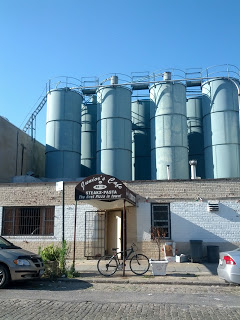
Best pizza in town. Made on site in the tanks
Pizza artisans
theory, meet practice.
Mob Pizza Cheese
Al Capone – who owned a string of dairy farms – forced New York pizzerias to use his rubbery mob cheese, so different from the real mozzarella produced here in New York City since the first immigrants from Naples arrived in Brooklyn around 1900.
The only places permitted to use good mozzarella made locally were the old-fashioned pizza parlors like Lombardi’s, Patsy’s, and John’s, who could continue doing so only if they promised to never serve slices.
Artisanal Pizza
Pizza connoisseurs bicker endlessly about where to find the best pies. And thanks to the brisk pace of high-profile openings in New York over the last few years — and especially the last 6 months — they have more serious local contenders than ever to bicker about. Many give the crown to Lucali, which opened in Carroll Gardens, Brooklyn, in 2006, and charges $34 (cash only!) for a pie with cheese, tomato, pepperoni and mushrooms. Others swear by Zero Otto Nove, which came along a bit later on Arthur Avenue in the Bronx. I’ve heard plugs for the misleadingly named Salvatore of SoHo, which began churning out coal-oven pies in a Staten Island strip mall last year, and for Kesté, which unveiled its gorgeous tiled oven in the West Village in March, a pizza-mad month when other instant favorites, including Anselmo’s, in the Red Hook section of Brooklyn, made their debut.
hmmm. have to try
Di Fara
Fame has come late for Domenico DeMarco, who for 40 years has operated Di Fara Pizza on Avenue J in Midwood, Brooklyn. Since 1999, the year that a favorable review in a city guidebook put his pies on the map, Mr. DeMarco has graced the cover of The Village Voice (the ”Best Italian Restaurants” issue in June), and his restaurant has topped the Zagat list of the city’s best pizzerias in 2004 and countless other guides to slice-related nirvana.
Through it all, Mr. DeMarco has changed very little. With his hair slicked back and flour on his shoes, he has continued to make each pizza personally as 3 of his 7 children labor in the back. He maintains beds of basil and rosemary on the windowsill, and imports nearly every ingredient from such faraway lands as Israel and the Netherlands. The man insists on no less than 3 different cheeses on each pizza, and chowhounds line up, sometimes for more than 1 hour to buy a regular slice for $2.50 or the Sicilian for $2.75. The city’s reigning pizza deity is pleased by this sort of success, but he is hardly surprised.
2010-10-25: man, i still haven’t been 😦
2018-06-12:
Longtime customers have noted fresh cows’-milk mozzarella in and out of rotation with the firmer, low-moisture variety. Grana Padano, once a fixture of Di Fara, stopped making appearances after the countertop-mounted rotary grater broke. Parmigiano and Pecorino replaced it for a while. There was even a short-lived era where the crusts were enigmatically burnt, seemingly by design, and that’s where things turn philosophical. “Dom’s pizza is a flowing river in that the only thing you can really count on is perpetual change, and that’s part of what’s interesting about it. He hasn’t stuck to the same method for 50 years.”
 Gregor J. Rothfuss