search-record.net is a living collection of tools for making things with your Google Search history. Try the tools with sample data below, or follow these directions to get started with your own archive.
Tag: mylifebits
Snuff
you ain’t seen nothing yet. with always-on recording, war reporting and snuff become indistinguishable.
A photo taken by a US Army camerawoman of the moment she and 4 Afghans were killed in an explosion has been released by the American military.
The Cobweb
The Wayback Machine is humongous, and getting humongouser. You can’t search it the way you can search the Web, because it’s too big and what’s in there isn’t sorted, or indexed, or catalogued in any of the many ways in which a paper archive is organized; it’s not ordered in any way at all, except by URL and by date. To use it, all you can do is type in a URL, and choose the date for it that you’d like to look at. It’s more like a phone book than like an archive. Also, it’s riddled with errors. One kind is created when the dead Web grabs content from the live Web, sometimes because Web archives often crawl different parts of the same page at different times: text in one year, photographs in another. In October, 2012, if you asked the Wayback Machine to show you what cnn.com looked like on September 3, 2008, it would have shown you a page featuring stories about the 2008 McCain-Obama Presidential race, but the advertisement alongside it would have been for the 2012 Romney-Obama debate. Another problem is that there is no equivalent to what, in a physical archive, is a perfect provenance. Last July, when the computer scientist Michael Nelson tweeted the archived screenshots of Strelkov’s page, a man in St. Petersburg tweeted back, “Yep. Perfect tool to produce ‘evidence’ of any kind.” Kahle is careful on this point. “We can say, ‘This is what we know. This is what our records say. This is how we received this information, from which apparent Web site, at this IP address.’ That this happened in the past is something that we can’t say, in an ontological way.” Nevertheless, screenshots from Web archives have held up in court, repeatedly. And, as Kahle points out, “They turn out to be much more trustworthy than most of what people try to base court decisions on.”
Aro
the transcribed life is now here
OverHeard stores the last 3 minutes of recording. no audio recordings are saved to its servers
Gordon Bell on MyLifeBits
this is a good summary of what smartphones, glasses with ubiquitous sensors will lead to. 1 lifetime is ~10TB at a “low res”.
Sum human experience
there is now a conversion from the sum of all human experience and contemporary units. to arrive at the conversion, you sum internal and external memory of humanity over all time. here are some estimates:
300EB for recorded history
200MB per human x 100B humans who ever lived, 20EB
call it 500EB, or half a zettabyte
Looxcie
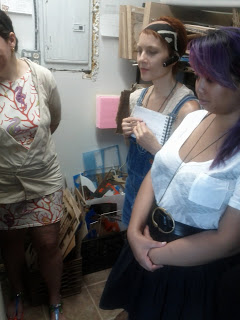
note the cyborg recording device on the red-haired lady. i have never seen these before. fascinating. welcome to the present where you are always on air. (just look for the red dot…)
Birth of a word
a great example what our imminent mylifebits future enables.
MIT researcher Deb Roy wanted to understand how his infant son learned language — so he wired up his house with video cameras to catch every moment (with exceptions) of his son’s life, then parsed 90K hours of home video to watch “gaaaa” slowly turn into “water.” Astonishing, data-rich research with deep implications for how we learn.
Future Camera Concept

i like the framing with your fingers. useful for lifestreaming
1TB hard drive
another milestone. $350. compare: “The storage requirement for a video stream and 2 audio streams, plus GPS location, is only ~10TB per year – which will cost about $25 by 2017”. ie, you can now do a lifelog for $5k/y
 Gregor J. Rothfuss