Ian Goodfellow’s tweets showing x years of progress on GAN image generation really bring home how fast things are improving. For example, here’s 4.5 years worth of progress on face generation:
And here we have just 2 years of progress on class-conditional image generation:
I was drawn to this paper to try and find out what’s behind the stunning rate of progress.
Tag: images


New MTA Art

Error Bars
error bars on error bars
All wealth

The Bellewether
It’s rare to find a truly secret space left in New York City but we recently had the opportunity to discover one, right in the middle of midtown Manhattan. Our friends at The Vanderbilt Republic, who run the inspiring programming at the Gowanus Loft, like the camera obscura installation in years past, are converting a raw space in midtown that was once an electrical repair company. The cavernous 800 m2 space is made possible by a combination of history and zoning – it actually spans 3 buildings, grandfathered in when skyscrapers were built on top. The once outdoor courtyards were closed in to fulfill a functional purpose in perpetuity, a state of impermanent operability – until now. The multi-room discovery is to be known as The Bellewether, a flexible performance and production space

Clean energy jerbs
Fastest-growing jobs: solar panel installer, wind turbine techs

2021-04-14: The way to do this is not with silly nonsense like union jobs
What we need to produce are very cheap renewable technologies, ones so cheap that the poorer countries of the world will adopt them as well. If we insist on packing a lot of labor costs (“good jobs”) into our energy technologies, we will not come close to achieving that end.
I was disappointed and unnerved by recent comments from Brian Deese, President Joe Biden’s top economic adviser, who in the context of climate change remarked that “…investing in infrastructure can be one of the most effective ways to do that in a way that creates lots of jobs.” The correct Econ 101 answer, of course, is that a low-jobs energy infrastructure liberates labor to produce other goods and services for us, leading to higher overall output. Such policies remind me of the “make-work” fallacy, namely the view that the deliberate creation of domestic jobs (for instance through tariffs) will lead to a better economy. We will wind up with more good jobs in total if we seek to lower green energy prices, not raise them.
Finding the JPEG Person
In 1972, a photo of a Swedish Playboy model was used to engineer the digital image format that would become the JPEG. The model herself was mostly a mystery—until now.

Anthropocene Scenes
These are photographs by Edward Burtynsky from The Anthropocene Project, a multimedia undertaking that showcases the effect humans have had on our planet. Top: a palm oil plantation in Malaysia. Bottom: a coal mine in Germany.

Command Respect

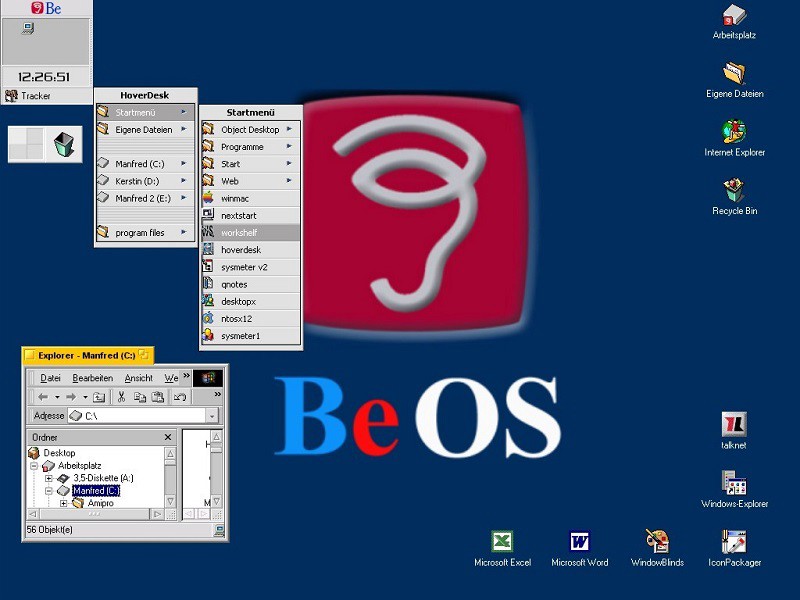
Be: Concept To Death
Be, the company Steve Sakoman and I founded after leaving Apple, had a great product idea, or so we thought, only to discover that a bad choice of partner would almost destroy the company.
 Gregor J. Rothfuss