Tag: images

mr. melvyns murder

Mr. Melvyn was known to his best friends as Lucky Mel, and he was indeed no stranger to luck and good fortune. Numerous casinos and low-down back-alley joints had witnessed Mr. Melvyn cashing in big time, and on this night – the big fight night, he was sure to make no mistake: he’d been saving up for years and put his entire fortune on Tyson vs. Sure Shot.

the inimitable k10k guys done it again, and bring us this wonderful short story.

Lenya

Late last week, Michael sent out our proposal to donate the wyona code base (renamed lenya) to apache. it has been a very interesting discussion since, and so far it is looking good. in any event, it feels great to enter a new community.
2003-04-08: This Thursday and Friday (April 10th and 11th), Michael and I will be at the office of Q42 in Den Haag. We will do a “Lenya Mini Sprint” there and the guys from Q42 will help us improve the Lenya User Interface. what is a sprint? We will also try to integrate Xopus 2.0.0.8 (which was the last Open Source version) and try to integrate their newest Xopus version (which is not Open Source). At the end of Friday there will be a reception at Q42’s office. Please let us know if you want to meet us in Den Haag or join the party on Friday night.
2004-04-25: the apache lenya community is organizing a sprint on may 14 and 15 in zurich, switzerland. we will focus on repository integration, but people with other interests are also welcome, of course. please sign up on the wiki (and watch the wiki for updates) if you would like to attend.
2003-04-11: just received word that the university of reunion will be using Apache Lenya for their site. here is an offer: pay for the flight and accommodation, and i will help setting up Apache Lenya 🙂

2003-05-13: turns out my work for the past couple weeks has been totally in vain. what started as (yet another) attempt to write a “clean” publication for apache lenya resulted in another publication with hacks. in retrospect, DOH of course, because each publication has its quirks that you only run into when you develop it. the time would have been much better spent tightening up the existing code base. instead, we broke code that was working perfectly with stupid changes, like changing the root element of aggregates. i have no one to blame but myself for this, but i will make damn sure we don’t waste any more time like this. i wonder why software “engineering” has to be so painful. we need a regimen that is more focussed on the bottom line to do away with such nonsense.
2003-05-23: i’m reading through the Apache mirroring FAQ today to figure out how to do a release. i’m pretty excited, luck permitting, Apache Lenya 1.0rc1 should hit the mirrors later today.
update. we are live.
2003-05-27: here is my newest try at shaping up my marketese speak. some gems:

  • content delivery
  • technologists
  • preeminent platform
  • future-proof

2003-06-12: son-of unipublic. this is (to my knowledge) the first independent deployment of apache lenya. very cool. now, when is their opening party?

2003-07-28:
U src/webapp/lenya/pubs/default/lenya/xslt/authoring/create.xsl
failed due to an internal error (took 0:18.754)

it’s high time for CVS to roll over and die. it’s numerous deficiencies are beginning to seriously piss me off.
2003-09-10: bill humphries is just demoing the apple intranet. it is based heavily on PHP and uses the concept of page envelope we came up with for lenya. very cool stuff.
2003-09-20: michael and myself paid a visit to bill at apple today to demo lenya. unfortunately i was not allowed to take pictures on the campus.
2003-11-15: i’m tooling away in las vegas, at the apachecon hackathon, trying to get apache lenya 1.2 out the door. meanwhile, my landlord is having fun with tools of his own. too much fun.

2003-11-28:

NZZ Online and Computerworld are 2 out of the 3 winners of the SiteAngel Trophy, a benchmark comparing performance and availability of swiss media websites. Both web sites are built on Apache Lenya, the open source Content Management System (CMS) originally developed by Wyona Inc. the leading swiss specialist for open source CMS.

computerworld was my first project at wyona.
2003-12-22: michi will represent lenya on a panel at iex that also features representatives from day, interwoven, obtree and red dot. michi will also be speaking at a pre-conference open source forum.
2004-01-30: i want to bring these 2 interesting workshops to your attention. They will be held on Wednesday, February 18 at University of Berne as part of the LOTS (Let’s Open the Source) event. Registration is open until February 16th
Supersonic Tour of Apache Cocoon
Speaker: Bertrand Delacretaz
This fast-paced tutorial gives a quick overview of the Apache Cocoon web applications framework, with a more detailed view of the more mainstream components of this framework: the multi-channel publishing subsystem, the Flow layer and the Cocoon Forms (aka Woody) components. By studying the inner workings of example pipelines and small applications, we will learn how to combine these components to take advantage of the massive amount of functionality offered by Apache Cocoon’s rich set of components.
Focused samples will help us understand what goes where and which components must be studied to be productive with Apache Cocoon.
Attendees are welcome to bring their laptops with the latest release of Apache Cocoon installed, for hands-on exploration during the tutorial, but the packed agenda does not allow for any help with installation problems during the presentation.
Apache Lenya Workshop
Speakers: Gregor J. Rothfuss, Andreas Hartmann
Wyona AG
Familiarize yourself with the features and architecture of Apache Lenya, the Content Management System from the Apache Software Foundation. The workshop will outline functionality by demonstrating projects (University of Zurich, NZZ) that were built using Apache Lenya. An architectural overview, building on Apache Cocoon (which is covered in a separate workshop) will be followed by lessons learned from our customer projects. Participants will learn valuable lessons for content acquisition, content architecture and cms customization, and there will be plenty of time to ask questions. The duration of the workshop is 3.5 hours.
2004-03-21: i’m always learning about new cool tools that ship with cocoon. today, i had a look at the instrumentation support. it allows you to analyze runtime behavior of lenya to spot troublesome areas. you can check memory usage, objects in cache, and many more.
2004-04-11: apache lenya now supports i18n, and conversely, we are accepting translations for the user interface. i am wondering if these should eventually go into their own repository? if the xaraya project is any indication, translations can quickly outgrow the code (in numbers of files.) openlogging reports that the xaraya translations repository is now the second largest bitkeeper repository, larger than the linux kernel. scary. 🙂
2004-05-11:

Cofax 1% (3)
DBPrism 0% (1)
Lenya 23% (40)
Magnolia 18% (31)
MMBase 1% (3)
Nukes 6% (11)
OpenCMS 7% (12)
RedHat CCM 0% (1)
Slide 2% (4)
Other (please comment) 2% (4)
Don’t know, I’ve never used any of them! 25% (43)
OpenEdit 2% (4)
InfoGlue 7% (12)

2004-06-07: it’s nice to get press even if it is not as clued-in as it could be:

Version 2.1.5 fixes numerous issues with the framework and is available for Unix and Windows environments. Stefano Mazzocchi who just last week was elected to the Apache Software Foundation’s Board of Directors, suggests that v2.1.5 is the most stable version yet released. In general, the community touts Cocoon’s XML framework as the “Web glue for your Web application development needs.” 1 of the direct Apache Cocoon sponsored projects, currently in incubation (not a fully ASF supported project) that relies on Cocoon is a Web content management system known as Lenya. The latest Cocoon release fixes at least 1 critical bug that will make Lenya more functional, according to Lenya committer Gregor Rothfuss. “We were quite happy to see it resolved”. The next Lenya CMS release is scheduled for release in the next 2 weeks.

you heard it, people. lenya 1.2 should be out soon 🙂
2004-08-03: with that start of the olympics, it’s a good time to mention that the national olympic committee of afghanistan runs on lenya.
2004-09-23: The board of the Apache Software Foundation passed the resolution to make Apache Lenya a top-level project.
2004-11-22: There will be a boston cocoon / lenya user group meeting on december 9th at 6PM, location to be determined. i will be speaking about creating print on demand solutions with cocoon. bring your friends, and check back at the wiki for more information.
2004-12-01: received the following email in the lenya developer mailing list moderation queue today:

Dear Lenya,
I am a researcher here at Vault, the career information company, and I believe that you work at Apache. I am contacting you to invite you to share your thoughts on corporate culture, recruiting, and other career topics at Apache (or another current/former employer) by filling out this brief anonymous online survey

2005-03-31: there is now a cocoon meetup group for cambridge. if you have an interest in apache cocoon or apache lenya, sign up to be informed about events in the boston area.
2005-05-21: the ASF now offers a solaris 10 zone to each pmc. not wanting to pass on a great opportunity to test drive it, i set up a lenya demo on our zone. i haven’t had a lot of time to explore yet, but some first impressions are in order: it looks like solaris 10 has a more reasonable selection of software installed, but the root shell still defaults to one that does not handle arrow keys, or sensible tab completion.. what’s up with that? i look forward most to exploring dtrace, especially in conjunction with java.
2005-06-02: The Apache Software Foundation is a proud partner of the Google Summer of Code initiative. The Summer of Code is a program designed to introduce students to the world of Open Source Software Development and provide them with a $4500 award for completing an Open Source project before the end of Summer. The Apache Lenya project currently has 3 project proposals as part of the Summer of Code, more may be added later. For details see
Overhaul search facilities
Implement editor API
Implement workflow queries
The deadline for application is June 14th so if you are interested you need act quickly. Competition is very high for these projects, but then so are the rewards. If you would like to create a proposal for any of the above then we need to follow the following process:

- student gains an overview understanding of the technologies involved in the proposal
- student expands the initial project outline to a draft proposal text:
- description of problem
- description of a proposed solution
- benefits of the solution to the Apache community
- an approach
- milestones in delivery
- expected timeline for delivery
- description of relevant students skills
- student and mentors work together to finalize this proposal
- proposal is submitted to project community for comment/approval
- student registers the proposal with Google via their website

The Apache Lenya Team
2005-06-03: apache lenya contributor jonathan linczak was interviewed by the web standards project about his experience in implementing a standards-based site. jon is responsible for the new fully CSS-based menu in the upcoming 1.2.4 release, and has written many tutorials. people like jon really unleash the standards-based goodness inside lenya, and it’s nice to see recognition for that.
2005-06-09: Apache Lenya now has WebDAV integration, thanks to a patch by Doug Chestnut.

2006-01-26: Kudos to my former colleagues at wyona for landing wired as a customer for apache lenya. While it would of course have been nice if this had happened on my watch as COO, it’s still satisfying to know that my laying the groundwork led to such outcomes.
2006-11-01: BeCompany, a new apache lenya systems integrator.
2007-06-19: welcome to radical transparency. eventually, you’ll be able to see this sort of graph (Apache Lenya Top 10 Committers) for every working person in the world. looking busy while doing nothing is on the way out.

Stigmergy beats pedantry

2 individuals interact indirectly when one of then modifies the environment and the other responds to the new environment at a later time. Such an interaction is an example of stigmergy.

The World-Wide Web is the first stigmeric communication medium for humans.

The World-Wide Web is human stigmergy. The web and its ability to let anyone read anything and also to write back to that environment allows stigmeric communication between humans. Some of the most powerful forces on the web today, Google and weblogs are fundamentally driven by stigmeric communication and their behavior follows similar natural systems like Ant Trails and Nest Building that are accomplished using stigmergy. The web is new. In the context of written human history is barely a blink of an eye. Yet as new as the web is, it is already showing its ability to support complex human interactions that mimic natural systems use of stigmergy. And were just getting started.

right-on. we are taking baby steps towards the global brain, sidestepping the ordeal of the pedantic web. id rather blog than type in angle brackets all day and worry about resources, properties and statements.

jealousy

damn roger makes me jealous. first off he is in paris (which rocks), second he is at a nice conference, and third he can take pictures on the road and update his blog in real time.
almost makes me reconsider my vow of abstinence from mobiles.

Slower and sharper

2 of my favorite diversions recently got a boost through new technologies: snowboarding and photography.

getting a grip
For skis, a network of electrodes embedded in each ski base will apply an electric field to the ski-ice or ski-snow interface. This low-frequency electric field will cause ice and snow to stick to the ski base, increasing friction and limiting the speed of the skier. If any skiers out there care to go faster, just increase the frequency. A high-frequency electric field applied at the ski base has an opposite effect as it melts snow and ice just enough to create the same thin, lubricating layer of water, but without the refreezing/sticking phenomenon.

depth of field

This is an image of inclined crayons from a traditional F/8 imaging system. The depth of field is less than 1 crayon width. The foreground and background are badly blurred due to misfocus.

After simple color and object independent image processing the final Wavefront Coded image is formed. This image is sharp and clear over the entire image. Compare to the stopped down image from the traditional system. Wavefront Coding allows a wide aperture system to deliver both light gathering power and a very large depth of field.

A Wavefront Coded system differs from a classical digital imaging system in 2 fundamental ways. First, the light traveling through a Wavefront Coded lens system does not focus on a specific focal plane. Because of a special surface that is placed in the lens system at the aperture stop, no points of the object are imaged as points on the focal plane. Rather, these points are uniformly blurred over an extended range about the focal plane. This situation is referred to as “encoding” the light passing through the lens system. The special Wavefront Coded surface in the lens system changes the ray paths such that each ray (except the axial ray) is deviated differently from the path that it would take in a classical, unaltered lens system and therefore they do not converge at the focal plane.

The second difference found in a Wavefront Coded system is that the image detected at the detector is not sharp and clear, as discussed above, and thus must be “decoded” by a subsequent digital filtering operation. The image from the digital detector is filtered to produce an image that is sharp and clear, but has non-classical properties such as a depth of field (or depth of focus) that is much greater then that produced by an unaltered classical lens system of the same f number.

Madrid

is pretty spiffy, yet overcrowded with overzealous shoppers. devout christians though, with stores to match.


2002-12-10: alright, i actually had a great time in madrid. so please excuse me while i blog some of the finer moments..

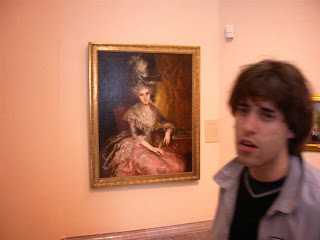
saw lots of art!
learned about ancient cockrings
witnessed the travails of old
went huh?
mi casa es su casa
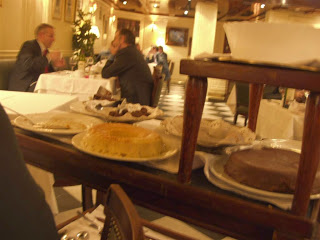
was wined and dined

oh and i gave a talk, too. thanks, jorge!

Space exploration

Against Human space exploration

It is true that science can be done in the space station. But science can also be done dressed in a clown suit atop a large Ferris wheel. The argument ought to be over where is the best place for it. Performing experiments in microgravity does not require a $100B platform. Moreover, much of the work that can genuinely be done only on the station is justified through another magnificently circular leap of logic. Research into the effects of microgravity on human health and the growth of soybeans, for instance, is useful only in the context of a manned mission to Mars.

It doesn’t pay to lift humans out of earth’s gravity well. Billions each year could instead be spent on research and development for cheaper transport options, spurring the advent of a commercial space industry.
2006-10-24: Our Non-Expeditions to the Moon and Mars

President Bush is right. The space shuttle and the space station deserve termination. The true heart of his proposal is the elimination of these programs, and the substitution of robotic exploration.

2007-01-28: Space for Survival

Space exploration is fundamentally about the survival of the species, about ensuring better odds for our survival through the promulgation of the human species. But as we do it, we will also ensure the prosperity of our species in the economic sense, in a 1000 ways.

NASA is starting to take extinction events seriously and arguing for space missions as a hedge. About time.
2007-06-06: Future of NASA

Reducing the cost of space access is now being addressed by the private sector. NASA is now acting as a responsible potential customer of commercial launch services (COTS). The government has a poor record competing with the private sector in the arena of cost effectiveness. NASA spent many years and billions of dollars in pursuit of next generation launch technologies, with limited success. NASA has now wisely chosen to provide a market with exploration programs and to permit private enterprise to have a crack at making that affordable. In the meantime NASA is developing the Ares family of launch vehicles to provide the capabilities it requires to initiate the human exploration program until the market is able to offer cheaper alternatives. As for the International Space Station (ISS), it is essential that we learn how to truly live and work in space – not just pay visits. ISS is a vital international laboratory for learning how to build, live aboard, maintain, and operate a complex vehicle in space. The same is true for a lunar base that enables us to use the resources of space and assists our education in how to reach Mars. As for favored contractors, the COTS program and the market established by exploration will open new venues for many companies and communities around the world to participate.

nasa’s reply to allegations of suckiness by wired et al
2010-05-15: The New Space Frontier

Today, the President will articulate an ambitious and exciting new plan that will alter our destiny as a species. I believe this address could be as important as President Kennedy’s 1962 speech at Rice University. For the first time since Apollo, our country will have a plan for space exploration that inspires and excites all who look to the stars. Even more important, it will work.

NASA finally creates a real space industry. You know, with competition and stuff.
2012-03-03: Space exploration future .Beyond on a related note, getting into AMNH early without all the crowds makes it twice as awesome.

2012-05-27: Mars Drive

The reference mission design of the MarsDrive Consortium is discussed, which has been created to facilitate exploration of the red planet through methods that are both realizable and cost-sustainable with existing technology. This mission plan—known as Mars for Less—is predicated on the use of existing medium-lift launch vehicles. In this architecture, 25-ton propulsion stages are placed individually in low-Earth orbit, where they are mated to Mars-bound payloads and ignited at successive perigees to execute trans-Mars injection. Spacecraft follow conjunction-class trajectories to the red planet and utilize aerodynamic methods for orbital capture and descent. Return vehicles are fueled with methane/oxygen bipropellant synthesized primarily from Martian resources. Dispatching expeditions from orbit with individual, high energy stages—rather than directly from the Earth’s surface—allows for the division of mission mass into more manageable components, which can be launched by vehicles that exist today. This plan does not require the development of heavy-lift launch technology: an effective yet costly proposition that may otherwise hinder current space exploration initiatives. Without the need for heavy-lift boosters, piloted missions to Mars may be undertaken presently, and within the capabilities of private initiatives. It is argued that the mission design herein represents a more viable method of conducting early human Mars exploration than proposals which require heavy-lift launch vehicles—an alternative method by which the red planet can be opened to humanity.

Between the safety fetish and cover your ass problems with government funded spaceflight, private companies have a 100x cost advantage. What flag will they plant in the regolith?

Here is one such proposal
2013-02-27: Going to Mars in 2018? This will be the most awe-inspiring and profound event this quarter-century.

Inspiration Mars Foundation believes in the exploration of space as a catalyst for growth, national prosperity, knowledge and global leadership. History has shown that strong nations reap these benefits when they boldly follow a path rooted in curiosity and guided by technological innovation. In 2018, the planets will literally align, offering a unique orbit opportunity to travel to Mars and back to Earth in only 501 days. Inspiration Mars is committed to sending a 2-person American crew – a man and a woman – on an historic journey to fly within 160 km around the Red Planet and return to Earth safely.

2013-03-12: Mars Research Station. I salute this effort. Very often, things look silly to our eyes that become crucial for humanity later on.

In the vast open spaces of southern Utah, Reuters photographer Jim Urquhart recently paid a visit to the Mars Desert Research Station (MDRS). Built and operated by a space advocacy group called the Mars Society, the research facility is investigating the feasibility of human exploration of Mars, using the Utah desert’s Mars-like terrain to simulate working conditions on the red planet. Since 2000, more than 100 small crews have served 2-week rotations in the MDRS, conducting research in an on-site greenhouse, observatory, engineering area, and living space. Urquhart was able to accompany members of the Crew 125 EuroMoonMars B mission inside the MDRS facility, and on a simulated trip to collect Martian geological samples.

2014-02-18: Indian Mars Exploration. India’s Mars mission is 9x cheaper than a similar NASA one. I hope they succeed and put another nail into the coffin of bloated military-industrial complex projects.

While India’s recent launch of a spacecraft to Mars was a remarkable feat in its own right, it is the $75m mission’s thrifty approach to time, money and materials that is getting attention.

2014-10-31: Exploration is sacrifice, and we’d best re-learn that lesson.

I would like to share my deepest personal thoughts on today’s Virgin Galactic Accident. As you know, this is deeply meaningful to me, my family and friends.

Today, most importantly, my heart goes out to those who have lost loved ones, and the many at Virgin Galactic, Scaled Composites, the Virgin Group and the Mojave Spaceport who this accident deeply affects.

I urge all of us to keep something in mind. We are on the verge of opening the space frontier, one of the greatest endeavors of our species.

Many Americans forget that 500 years ago 1000s of European gave their lives to open the Americas, and 200 years ago, the early American’s risked their lives to open the west. This is what exploring is all about. We risk our lives for what we believe in. This is the American way, the explorer’s way.

I for one, am proud to be a Virgin Galactic client. I believe in the company, and know, without a doubt, that they will succeed, and I will fully trust them with my safety when my turn to fly materializes.

2014-12-15: No More Space Race

A far cry from the fierce Cold War Space Race between the US and the Soviet Union, exploration in the 21st century is likely to be a far more globally collaborative project. This spirit of trans-border ownership and investment seems set to continue. One key part of this is the Global Exploration Roadmap, an effort between space agencies like NASA, France’s Centre National d’Etudes Spatiales, the Canadian Space Agency, and the Japan Aerospace Exploration Agency, among many others, that is intended to aid joint projects from the International Space Station to expeditions to the Moon and near-Earth asteroids—and to reach Mars. On a recent trip to India’s space agency, Stofan recounted to me, she met with many Indian engineers who were just as excited as the Americans to get scientists up there, not only to explore, but also to begin nailing down the question of whether there was ever life on the red planet. It’s also clear that the next stage of space exploration will not only be more global, but will equally involve greater private and public partnerships. Companies like Space X are increasingly involved in NASA’s day-to-day operations

2015-02-03: The caveman in space

At 61, Dr Stone appreciates the limits of human exploration. 23 of his friends lost their lives on expeditions and he has personally recovered 7 bodies. Now Stone Aerospace is developing a team of robots to hunt for microbial life on Europa. The discovery of Europan life would, Dr Stone reckons, be “a pretty good contender” for one of the most momentous events in human history. That might satisfy most explorers, but not Dr Stone. He has founded the Shackleton Energy Company to process water on the Moon into oxygen and hydrogen for rocket fuel.

2018-03-27: NEO Manned missions

The possibility of applying the Space-X Falcon-Heavy booster to human exploration of the inner solar system is discussed. A human-rated Dragon command module and an inflatable habitat module would house and support the 2-4 person crew during a ~1 year interplanetary venture. To minimize effects of galactic cosmic rays, older astronauts should conduct the mission during Solar Maximum. Crew life support is discussed as is application of a ~1-km square solar photon sail. The sail would be applied to rendezvous with the destination Near Earth Object (NEO) and to accelerate the spacecraft on its return to Earth. An on-line NASA trajectory browser has been used to examine optimized trajectories and destinations during 2025-2026. A suitable destination with well established solar-orbital parameters is Asteroid 2009 HC.

Minimal life

Craig Venter has been given ethical approval and a government grant to build the first artificial bacterium. He plans to create a single-celled organism with the minimum number of genes to sustain life.

This could be the drosophila of proteomics by having an idealized organism that is as simple as it can possibly be. Even then, this organism will still be orders of magnitude more complex than cellular automata. Now that I have more time, I need to delve into a new kind of science


2008-09-12: Syn3.0

J. Craig Venter’s work to build an artificial bacterium with the smallest number of genes necessary to live takes current life forms as a template. Protocell researchers are trying to design a completely novel form of life that may never have existed.

2014-09-03: See also this talk on synthetic life:

We now know we can create a synthetic organism. It’s not a question of ‘if’, or ‘how’, but ‘when‘, and in this regard, think weeks and months, not years.

2016-03-26: syn3.0 update:

Venter’s team painstakingly whittled down the genome of Mycoplasma mycoides to reveal a bare-bones set of genetic instructions capable of making life. syn3.0 contains just 473 genes or 531k bp, smaller than any independently replicating organism discovered on Earth to date. it is unclear what 149 of these genes do. also not a single gene is shared across all of life

2016-10-16: syn3.0 isn’t minimal though. Symbionts / parasites need ~50% DNA:

With only 160k base pairs of DNA, the genome of Carsonella ruddi is less than 50% the size thought to be the minimum necessary for life. Carsonella lives inside a leaf-munching insect, called a psyllid. They have a symbiotic relationship. The bacteria’s sheltered life has allowed it to pare its genome down to the bare minimum. There are certain genes necessary for life that the bacteria’s genome lacks, but these are compensated for by its insect host.

2022-02-25: And now some new work blends Alife with minimal life:

The minimal cell the team modeled, JCVI-syn3A, is an updated version of one presented in Science in 2016. Its genome is designed after that of the very simple bacterium Mycoplasmas mycoides, but stripped of genes that were not essential for life. JCVI-syn3A gets by with 493 genes, but no one knows what 94 of those genes do except that the cell dies without them. To build the new model, the team took an abundance of findings from various fields and wove them together. They used flash-frozen, thin-sliced images of the minimal cell to position its organic machinery precisely. A massive protein analysis helped them sprinkle all the right known proteins inside, and a detailed analysis of the cell membrane’s chemical composition helped them place molecules correctly on the outside. A thorough map of the cell’s biochemistry provided a rulebook for the interactions of the molecules.

As the digital cell grew and divided, 1000s of simulated biochemical reactions occurred, revealing how every molecule behaved and changed over time. The simulations mirrored many measurements of living JCVI-syn3A cells in culture. But they also predicted characteristics of the cells that hadn’t yet been noticed in the lab such as how the cell portions out its energy budget and how quickly its messenger RNA molecules degrade, a fact that critically affects researchers’ understanding of how the cell regulates genes. With a complete enough model, the researchers should be able to get creative: They can see what happens if they prune biochemical pathways, drop in extra molecules or set the simulation in a different environment. The results should give more insights into which processes cells need to survive — and which they don’t. They might even offer glimpses into what the very first cells required billions of years ago.


2022-02-28: New Yorker writeup: Richard Feynman once quipped that biology would be easy if you could “just look at the thing!” We are nearly there. “All these questions that people have. I think you’re going to be able to say, ‘Let’s just do a tomogram.’ ”

Some biologists are now combining approaches. Their goal is to create an integrated view of life inside the cell, in the form of a computer simulation that puts the whole system into motion. In grad school, Villa studied under Klaus Schulten, who helped develop the field of whole-cell computational modeling. Klaus worked from the bottom up, favoring “all-atom” simulations, in which virtual atoms follow the laws of quantum mechanics, while Zan worked from the top down, with “kinetic” models that track the cell’s larger traffic patterns. By the 2010s, the state of knowledge had advanced enough for them to try building a hybrid model. Klaus died in 2016. But, last month, Zan’s group published a paper in Cell that outlined a computational model of JCVI-syn3A. The model drew on cryo-EM images from Villa’s lab and on a genetic inventory supplied by J.C.V.I. It included all 452 of JCVI-syn3A’s proteins, plus other cellular bits. In the simulation, these parts interact among themselves as they would in real life.
The software aims to simulate a world that’s very different from ours. If a cell were blown up to the size of a high-school gym, you wouldn’t be able to see across it. It would be filled with 10000s of proteins, most about the size of a basketball. Other biomolecules no bigger than your hand, and water molecules the size of your thumb, would fill the spaces between. (To scale, your whole body would be about the size of a ribosome.) The mixture would have the consistency of hair gel. In such a world, gravity would be virtually meaningless—you would be weightless, as if suspended in a ball pit. And everything would be moving. The mixture would buzz constantly; spend just a few seconds inside it and every medium-sized object around you would have explored every square inch of your body. It would feel like pandemonium, but it wouldn’t be.

2022-03-13: More on cryo-ET and why it is such a big deal.

cryo-ET has evolved tremendously over the past 20 years. Advancements in the field will continue in the years to come, significantly enhancing our knowledge of prokaryotic cell biology. Those enhancements include but are not limited to improved sample preparation workflows, advances in hardware and software, and the curation of the vast amount of data into publicly available resources. Depending on the collection scheme and chosen magnification, fast tomography could increase collection time per target by 50–75%, vastly multiplying the amount of data that can be collected per sample. Resources such as the Caltech Electron Tomography Database have laid the groundwork for building comprehensive collections of cryo-ET data. In turn, some of this information has been translated into resources such the Atlas of Bacterial and Archaeal Cell Structure. This open access, digital resource provides detailed information about the prokaryotic ultrastructure of 85 species, which can be used as a source for comparison of structures in different strains, education, and comparison of sample treatments.

There’s also other microscopy techniques that have lower resolution, but can create 3D movies:

By combining 2 imaging technologies into Multimodal Optical System with Adaptive Imaging Correction (MOSAIC), scientists can now watch in unprecedented 3D detail as cancer cells crawl, spinal nerve circuits wire up, and immune cells cruise through a zebrafish’s inner ear.

2023-07-15: Regaining fitness

We went into the study thinking JCVI-syn3B simply wouldn’t be able to contend with the “inevitable mutations [that are] going to hit one of those essential genes”. The team pitted JCVI-syn3B against the first-generation JCV10syn1.0 from which it was derived. Each strain grew for 2k generations. Although both strains rapidly mutated, JCVI-syn3B could flexibly modify its genes like JCV10syn1.0, even though the latter had far more genetic letters to tolerate random mutations. Both bacterial strains survived similar types of genetic changes—insertions, deletions, and the switching of genetic letters—without a hitch.
“The initial effects of genome reduction were quite large; they made the cells sick”. Their fitness dropped by 50%. Fast-forward 2k generations, and it was a different picture. The minimal cells bounced back, regaining a fitness rate similar to their non-minimal cousins. Despite harboring a bare-boned genome, they readapted to their surroundings and overcame initial genetic shortfalls. The minimal cells’ main lifeline seemed to be “metabolic innovation.” Rather than adapting themselves to slurp more nutrients from the surrounding broth, the cells instead increased their ability to synthesize molecular pieces of fat into an outer protective layer, without sacrificing the lipid molecules essential for regeneration.