Tag: history
Biggest polluter in history
This guy invented CFC which depleted the ozone layer, and added lead to gasoline, leading to widespread lead poisoning and crime (lead makes people into dumb criminals).
2022-02-23:
It has been suggested that the Roman period should be called the “Lead Age,” an archaeological successor to the Iron Age. Lead was used extensively in Roman construction, because it is malleable and resists corrosion when in contact with air and water. Molten lead was poured around iron clamps to join column drums together and to secure marble facades to blockwork. Lead sheets and solder were used to form and seal waterproof joints. Most famously, lead was used in Roman waterworks: to form pipes that transport water at pressure, to plumb fountains and baths, for rain gutters and roofs, and as tanks to store water, including potable water, for various purposes. It has been determined that the piped water of the city of Rome may have contained 40x the lead of natural spring water before 250, falling to 14x by the year 500, as pipes became choked with scale, cracked, and failed, and the broader water system fell into disrepair.
Contrary to a popular theory, it is unlikely that many Romans ingested toxic levels of lead from their water pipes. Although lead is soluble in water, calcium carbonate deposited by hard water provided a barrier between water and lead. Moreover, calcium prevents the gut from absorbing lead. Drinking hard water transported in lead pipes did not present a major health risk to Romans, although in soft-water areas the risks were higher, and lead carbonate might form a less protective scale inside pipes. If not from their water, however, Romans contrived many additional ways to ingest and absorb lead. It was used for medicinal purposes, in cooking and for mixing sauces, and for preserving and sweetening wine. Roman saucepans manufactured from a mixture of lead and tin were used to produce reductions of must (unfermented grape juice) called, according to its concentration, sapa, defrutum, or caroenum, all full of lead. Salt was produced in lead brine pans, heated to evaporate water, before the salt was chipped and scraped away.
At 3rd-5th-century cemeteries, lead concentrations were in a range from 100 to 250 mg/g, compared with c. 14 mg/g measured in the ribs of Neolithic farmers. Natives of Roman Britain were also far shorter than their Neolithic predecessors and, just as strikingly, shorter than the population that followed them. Women were on average only 152 centimeters tall and men 164 centimeters. The average length of a Roman’s thighbone was 3 centimeters shorter than that of an Anglo-Saxon. While changes in diet and disease burden after the Roman conquest were consequential, data suggest that Roman-age Britons were on average eating more proteins, including a range of seawater fish and mollusks, than their Iron Age ancestors, which should have led to an increase in stature.One must wonder, therefore, at the impact of extremely elevated lead concentrations, since any level of lead contamination is known to stunt growth in children.
Israel and Iran alliance
this is an interesting lesson in geopolitics. the conflict between iran and israel is of political origin after the end of the cold war, and can therefore be resolved politically. this is a short period in a relationship spanning 2.5 ka to date.
Schleicher’s fable
Schleicher’s fable is a text composed in a reconstructed version of the Proto-Indo-European (PIE) language, published by August Schleicher in 1868. Schleicher was the first scholar to compose a text in PIE. The fable is entitled Avis akvāsas ka (“The Sheep and the Horses”).
it would be nice to preserve the sounds of proto-indoeuropean in something a bit more durable than soundcloud.
http://web.archive.org/web/20131003025212/http://soundcloud.com/archaeologymag/sheep-and-horses/embed%5D
Medieval People In Bad Situations
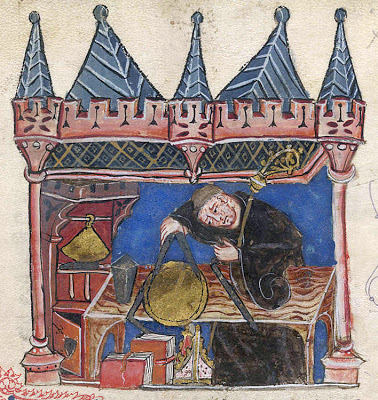
Every day is the new worst day of this guy’s life. The least they could have done was made the ceiling high enough for him to stand up straight while manually laboring all day.
The first blog?
Today I would probably describe Archipelago as a group blog. It was a computer-based system that allowed ~12 members to regularly post short essays and whimsical observations. Each member had his or her own icon which appeared next to postings which contained pictures, sounds, and hyperlinks. All pretty standard except for 1 thing: the year was 1988.
Beer deextinction
dogfish got me into craft beers. their beers aren’t always winners but they certainly go into interesting directions:
Kvasir was developed with the help of evidence taken from a 3500-year-old Danish drinking vessel: wheat, lingonberries, cranberries, myrica gale, yarrow, meadowsweet, honey and birch syrup. “This beer is something no one has done for 1000s of years“
The Lycurgus Cup
this is absolutely amazing.
the Lycurgus Cup is unique. The artisanship this required boggles the mind. The glass makers could not have added such minute amounts of gold and silver just to the glass the cup was going to made out of. These particles are 70 nanometers wide. You can’t even see them with an optical microscope, never mind the human eyeball; you need a transmission electron microscope at least. Experts believe the craftsmen added the minimum possible of the metals and then diluted the glass-melt with more and more glass until they had the proportion right.

Transportation has regressed
In 1962, riders could jump from Newark to Wall Street by helicopter for just $6 ($46.61 in today’s $) as opposed to an $8 cab ride ($61.88 today)
5 ka game tokens
The find confirms that board games likely originated and spread from the Fertile Crescent regions and Egypt more than 5 ka ago (Senet from predynastic Egypt is considered the world’s oldest game board). The tokens were accompanied by badly preserved wooden pieces or sticks. Sağlamtimur hopes they’ll provide some hints on the rules and logic behind the game.
 Gregor J. Rothfuss