Kenny Shopsin, the chef-proprietor of Shopsin’s, the defiantly idiosyncratic general-store-cum-restaurant in the West Village and, later, the Lower East Side, was not the sort of person for whom death ever seemed a possibility. Cranky, nonconformist, uninhibited, seemingly driven by an internal engine of profane irascibility, he was a New York legend, part of the social architecture of the city, a wild-haired totem of a lower Manhattan that once was, before the degradation of Greenwich Village into a place of vacant luxury storefronts waiting to be reanimated by businesses able to pay 5- or 6-figure monthly rents. The news of Shopsin’s death, which spread like a rumor over Labor Day weekend, and was confirmed on Tuesday by his daughter Tamara, was like one of the legs being yanked off a chair. We’re still upright, but things are very wobbly.
Tag: history
1918 Flu
The Spanish flu strain killed its victims with a swiftness never seen before. In the United States stories abounded of people waking up sick and dying on their way to work. The symptoms were gruesome: Sufferers would develop a fever and become short of breath. Lack of oxygen meant their faces appeared tinged with blue. Hemorrhages filled the lungs with blood and caused catastrophic vomiting and nosebleeds, with victims drowning in their own fluids. Unlike so many strains of influenza before it, Spanish flu attacked not only the very young and the very old, but also healthy adults between the ages of 20 and 40.
2020-03-01:
In most disasters, people come together, help each other, as we saw recently with Hurricanes Harvey and Irma. But in 1918, without leadership, without the truth, trust evaporated. And people looked after only themselves.
Ancient Greece colors
Once upon a time, long before wars, natural disasters and erosion took hold of the ancient Greek statues, these ivory gems vibrated with color. Ancient Greek sculptors valued animated and pulsating depictions as much as they valued perfection and realism, and it has finally become fact that these artists utilized color in their creations. The stark white Parthenon once breathed in blues, yellows and reds, and—though it took 1000s of years for this to be solidified in art historical circles—now, scholars are finally able to display the ancient world with the same rainbow vitality it once possessed.

General Magic
Chances are that you’ve never heard of General Magic, but in Silicon Valley the company is the stuff of legend. Magic spun out of Apple in 1990 with much of the original Mac team on board and a bold new product idea: a handheld gadget that they called a “personal communicator.” Plugged into a telephone jack, it could handle email, dial phone numbers, and even send SMS- like instant messages—complete with emoji and stickers. It had an app store stocked with downloadable games, music, and programs that could do things like check stock prices and track your expenses. It could take photos with an (optional) camera attachment. There was even a prototype with a touch screen that could make cellular calls and wirelessly surf the then- embryonic web. In other words, General Magic pulled the technological equivalent of a working iPhone out of its proverbial hat—10 years before Apple started working on the real thing. Shortly thereafter, General Magic itself vanished.
80s climate mitigations
in the decade that ran from 1979 to 1989, we had an excellent opportunity to solve the climate crisis. The world’s major powers came within several signatures of endorsing a binding, global framework to reduce CO2 emissions — far closer than we’ve come since. During those years, the conditions for success could not have been more favorable. The obstacles we blame for our current inaction had yet to emerge. Almost nothing stood in our way — nothing except ourselves.
17th century food
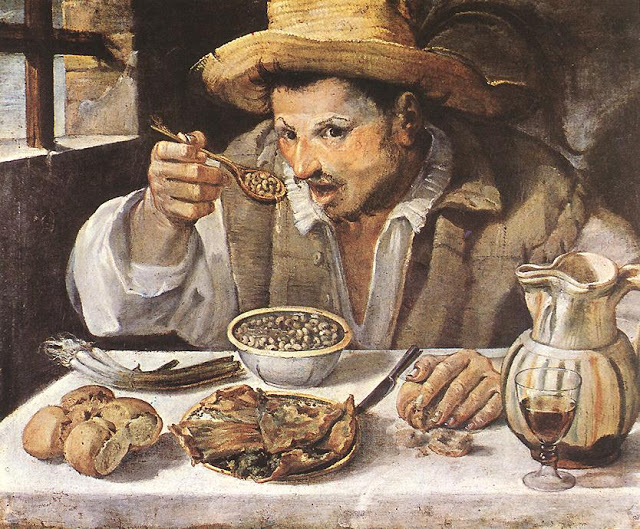
Most people in the early modern world—not just in Europe, but everywhere—were illiterate farmers and pastoralists whose diet was hyper-minimalist by contemporary standards. This is not to say that their food tasted bad, necessarily. But it was clearly very simple, and very starch-heavy. From China to Europe to sub-Saharan Africa, gruels and stews made out of staple grains or legumes were the daily fare. Italian farmers weren’t eating eggplant parmesan or spaghetti with meatballs. They were typically eating either boiled beans or grains, day after day after day. The acute eyes of Bruegel the Elder captured one example of this universal food of the premodern peasantry. In Bruegel’s The Harvesters, a team of peasants is taking a break for a mid-day meal which seems to consist entirely of bread and bowls of what I am guessing is a wheat-based gruel, something akin to Cream of Wheat. The jugs they’re drinking out of probably contain small beer.
240 ma Geocoding
A tool to plot modern addresses on a map of the Earth. The tool defaults to a view from 240 ma ago, smack in the middle of the Pangaea supercontinent era, but you can select views from 750 ma ago right up to the present.
4.5 hours silent staring
In 1969, United Nations Command negotiator and US Maj. Gen. James B. Kapp and North Korean Maj. Gen. Ri Choon-Sun sat across the table from one another for 11.5 hours without eating or using the restroom. The delegates were only permitted to leave the room if the person who called the meeting proposes a recess. Ri never did. In fact, the 2 men spent the last 4.5 hours of the meeting silently staring at one another. At 22:30, Ri stood up and walked out.

Brontë Sisters portrait
The only known surviving portrait taken from life of sibling literary luminaries Charlotte, Emily and Anne Brontë has gone home. It was painted by Branwell Brontë around 1834 at the Haworth parsonage, the family’s home on the Yorkshire moors for many isolated years of their childhood. That parsonage is now the Brontë Parsonage Museum. It usually has to make do with a copy of the famous group portrait, but the original work is now being exhibited in the place where it was painted in Emily’s honor.
Floorboard Confessional
Joachim Martin was the carpenter who installed the parquet for the chateau’s then owner – and what he left behind was a kind of secret diary intended to be read only long after he was dead and buried. Joachim’s diary implies that in places like the village of Les Crottes infanticide was taboo. People knew it went on, but no-one spoke out. Quite possibly the pressure of the secret was one factor that prompted Joachim to unburden himself on his planks. Another appears to have been his anger at the local priest. The 1880s were a time of rapid change. France’s Third Republic was bedding in, having seen off a final challenge from the monarchists, and across the country reforms were being introduced that limited the powers of the church. Joachim approved of these reforms – principally, it seems, because of his personal animosity towards the Abbé Lagier; he thought he was an obsessive womanizer, who abused the confessional for sexual kicks.
 Gregor J. Rothfuss