there will be a farewell party on sun dec 14 2003 in the evening. you are invited!! the self-flagellation is optional as i plan to be back after the holidays. we shall see.
Tag: events
mit sloan @ the museum of fine arts

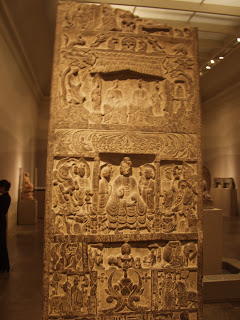
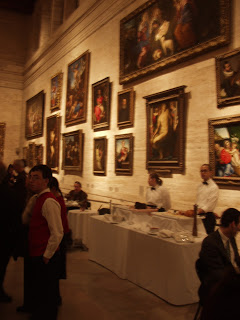
thank you, anonymous student who paid for this with your loan. good times!
Beyond Brochureware
Attorneys in small and medium-size practices are discovering that the Internet is an essential medium for nurturing their businesses in an online world. From simply being visible on popular search engines like Google, to offering valuable online information and resources, more law firms are using the Web as a powerful and economical marketing, productivity, communication, and even service delivery tool. At this seminar you’ll learn from other attorneys with hands-on experience about how to increase the value of your practice with a resource-rich website. You don’t need any special computer skills or background to enjoy and derive real value from this practical, business-oriented presentation.
let me know if you are interested to attend.
Birthday
did i mention my wish list?


a good time was had.
Physics in public policy
The Frederick S. Pardee Center for the Study of the Longer-Range Future at Boston University will present Murray Gell-Mann, recipient of the 1969 Nobel Prize in Physics, for 2 lectures, December 2 and 10. The evening lectures will be held at the Boston University School of Management, 595 Commonwealth Avenue. The companion lectures, titled Regularities and Randomness in the Past and the Future, will address how an understanding of phenomena known to the world of physics – both persistent, unchanging events and random, incidental ones – can inform our development of long-lasting, broadly applicable public policies.
always interesting to hear about the theoretical underpinnings for augurs. i will of course be there.
Dive into dive bars
i had an awesome time in new york over the weekend after our sushi event on friday night. the cast:
paul ford
writer, XML & semantic web hacker
michael wechner
physicist, OSCOM founder, entrepreneur, XML geek
michael m. wechsler
lawyer with coding fu. scares the hell out of me. operates a community law site. p2p law?
sarah m. byers
boston-based maker of trouble and film producer
susan “sooz” kaup
event organizer (geekpride 2000 etc), reed’s law embodiment
chalu kim
zope hacker, entrepreneur, artist
paul taggart
freelance photographer
joshua darden
wunderkind typographer
a trip report is available.

Steb Sly and John Weir
Steb Sly emailed me yesterday and alerted me to some of his tracks. I especially like his live set (40min). Meanwhile, my friend John Weir was spinning in San Francisco yesterday, and I hope the recording will be online soon.
Bad scifi lessons
dave liloia alerted me to the sci fi movie nights at the harvard center for astrophysics.
The Harvard-Smithsonian Center for Astrophysics will screen a classic science fiction film on the first Thursday of each month. The series will explore the idea that “everything we learned about science, we learned from the movies.” Except for Camp-o-Rama, doors open at 18:45 and programs begin at 19:10 with a Flash Gordon serial. Movie begins at 19:30.
the next installment on 12/6 features robot monster along with the well-known plan 9 from outer space:
Ro-Man, the most evil creature in the Universe, comes to Earth to kill everyone with his powerful death ray. Perhaps even outdoing Plan 9 From Outer Space as the Biggest Turkey Ever Made, Robot Monster is beyond belief…and that’s why it is so much fun to watch…but no more than once! Labeled a “Poverty Row Quickie” by film critics, this low budget 1950’s B film stars actors and directors who never should have come within a km of a movie camera. Featuring imbecilic dialog and moronic costumes, this classic sub-schlock masterpiece rivals anything put out by Ed Wood! Starring: Who cares?
Cafe scientifique
i was at the cafe scientifique last night. a beautiful concept.
Cafe Scientifique is an informal discussion forum giving like-minded people the opportunity to gather in bars and cafes all over the world to discuss the great topics in science. It is based on the Cafe Philosophique movement which was started in France in 1992 by the philosopher Marc Sautet who wanted a place in which ordinary people could discuss topics in philosophy.
yesterday, the topic was spam, with short talks by simson garfinkel of oreilly fame, and the painter-programmer paul graham who popularized bayesian filtering. a most enjoyable experience.
Agile metrics
i was a guest at the agile round table near boston last night. the event drew a crowd of veteran software engineers, i was the youngest in attendance by 20 years.
ken schwaber outlined his and jeff sutherland’s SCRUM approach, which struck me as interesting and worthwhile to follow up on.
jeff sutherland, CTO of patientkeeper, demonstrated how he manages his teams of developers with GNATS. jeff figured that developers loathe red tape, and had the goal to limit the effort required to 1 minute per day for developers, and 10 minutes per day for project managers.
and he was not using gantt charts to achieve this either. calling gantt charts totally useless for project management beyond giving warm fuzzies to the client, he explained how he leveraged their bug tracker to double as a means to keep track of effort.
each morning, developers review their tasks and update the work remaining estimates which have a granularity of one day. the project managers, in turn, analyze the reports that GNATS automatically creates. reports such as number of new tasks vs closed tasks, total work remaining and other metrics that can be derived from the task data.
tasks are the cornerstone here. jeff was able to demonstrate to the business side that the high level business goals were off by 100% with their effort estimates, while the low-level tasks achieved an accuracy of 10% on average. this led to enthusiasm from all parties to drill down on any project and get to the task level ASAP to get meaningful estimates. and, like psychohistory, project management is inherently stochastic.nowhere to run, nowhere to hide
the level of transparency of this system is unprecedented. with everyone in the company able to see on a daily basis how much work was remaining and what the roadblocks were, the initial fears that developers would be pounded on by management turned out to be unfounded. instead, the transparency enables everyone to do real-time adjustments and to detect problems early, which has taken a lot of politics and second-guessing out of the equation.
when analyzing a project, jeff focuses on burn down
, the part of a release where open tasks are relentlessly driven down to 0 by a joint effort of developers and business people. the corresponding graphic (roughly a bell curve) illustrates the importance of the burn down nicely, adding weight to jeff’s assertion that burn down is the only thing that matters to get a release done in time.
which prompted me to ask for advice on how to drive an open source release as a release manager. people are not exactly required to do your bidding, but metrics may help there too. collect these useful data points, as the bugzilla-bitkeeper integration is doing, and let them speak for themselves. peer pressure and pride in workmanship will take over from there. that’s the idea anyway..
 Gregor J. Rothfuss