Tag: architecture

Governors Island future?

i have always wondered about governors island. this is an intriguing speculation

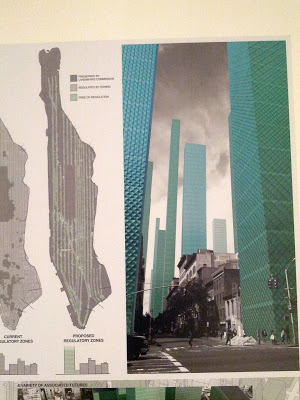
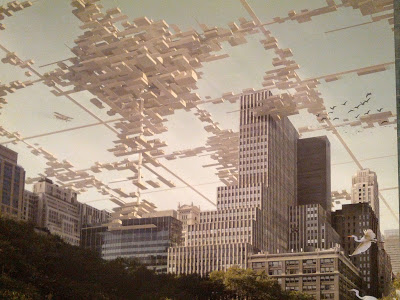
Vishaan Chakrabarti unveiled a radical proposal to connect the Financial District to Governors Island through a land bridge made of landfill, replete with a new mixed-use, high-rise, green infrastructure community. The setting for his presentation was a conference called “Zoning the City”, convened by New York City’s Department of City Planning and Harvard’s Graduate School of Design, and Chakrabarti’s premise was how to zone for a modern Central Business District, for affordability, for livability, for energy and waste, and finally for resilience. He armed his argument with planning instruments and infrastructure developments, such as the transfer of air rights and the provision of waste-to-energy facilities, and he closed with a bold vision to create a projected “8 km2 of development and generate $16.7B in revenue for the city” in a neighborhood that is currently harbor.

Greatest grid

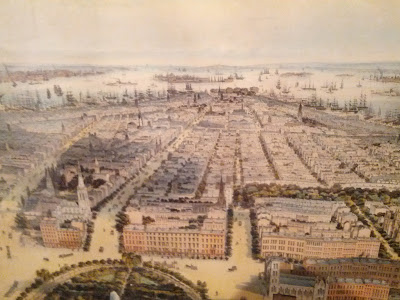
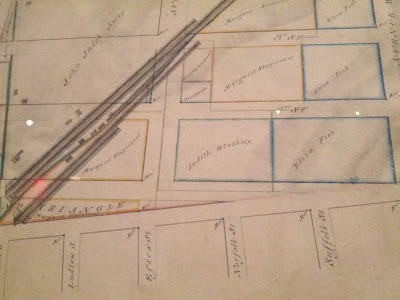
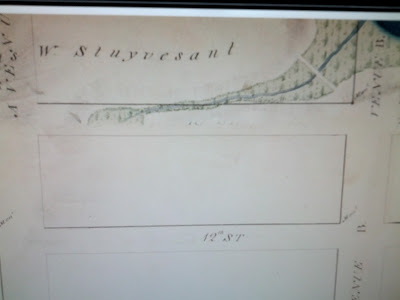
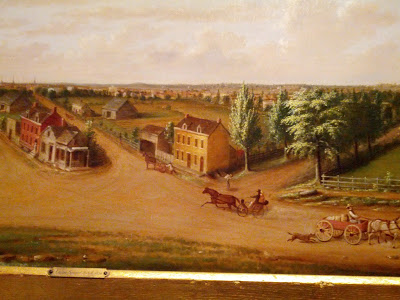
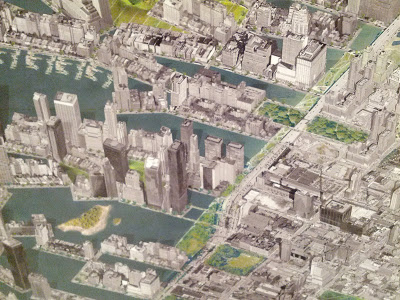
Visions of Manhattan and the 1811 master plan

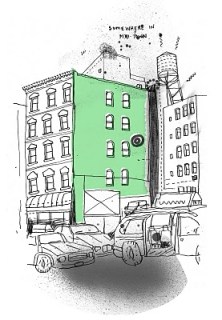
The city grid, which once served to organize the development of private real estate by providing access to land parcels, now has a more pressing role to play in making cities livable. Our reimagining of the grid starts from the premise that how we use public rights of way no longer meets the city’s needs, so we should transform the streets radically, dedicating them to pedestrians. Our idea has 2 major precedents: the Dutch woonerf and the Barcelona superblock. The shared street or woonerf has a continuous, curbless, textured surface, and through these cues and others (such as signage), nudges car drivers to conform to the speed of pedestrians using the same space.

Depressing suburbia

Finally, a scientific explanation for the feeling of depression I get from suburban environments dominated by Applebee’s, OfficeMax and 8-lane thoroughfares. Urban design can have a measurable effect on how people feel. Researchers examined levels of self-reported happiness in 10 major cities. Quality urban environments do indeed contribute to happiness among residents.

“People are often connected to quality places that are cultural and distinctive. Not all neighborhoods are the same. Some are designed and built to foster or enable connections. Other are built to discourage them (e.g., a gated model) or devolve to become places that are antisocial because of crime or other negative behaviors.”

Death to suburbia. I have nothing against truly rural communities, it is the sea of despair and mediocrity in between that is the problem.
2012-07-13: I have said as much for 10 years

Nearly everything that these families had striven for — material possessions, good jobs, extracurricular enrichment for their kids — made them wholly miserable.

Robots bricklaying

Speed this up by a factor of 10 – 100x and things will get really interesting.

2016-01-08: Construction robots are 3x faster. Construction is long due for a mundane singularity.

A new construction worker has been lending high-efficiency help to job sites, laying bricks at 3x the speed of a human worker. SAM (short for Semi-Automated Mason) is a robotic bricklayer that handles the repetitive tasks of basic brick laying

2016-07-28: Bricklaying update

All you need to input is a CAD file of the house structure and Hadrian X does the rest: the system handles automatic loading, cutting, routing and placement of all the bricks, one course at a time. Bricks are fed along a conveyor belt that sends them up the robotic arm, where the sides of the brick are coated with clear construction adhesive. The arm then rotates the bricks and extends to drop them into place. Because they are glued together, no mortar is necessary.

2021-01-28: Robot Builds from CAD. We need this at scale to break free from the BS that is “construction”, and to actually build a better world.

An Australian company called FastBrick Robotics has invented what may be an architect’s wildest fantasy: The ability to go from a CAD file to a standing structure, with no chance for those pesky human workers to muck up their design.

Build the walls of a house in one day
Maintain accuracy over distance
Safer working environments
Moving toward zero waste construction
Significant cost savings

Gardening at scale


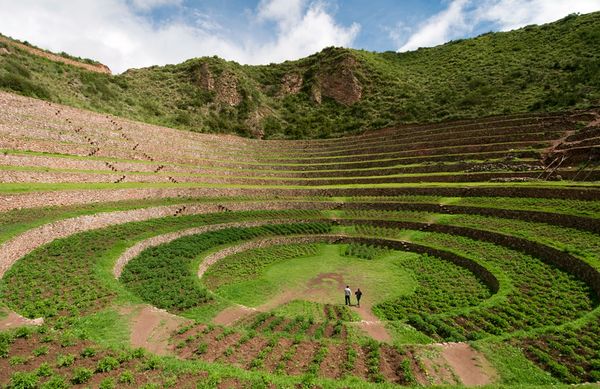
Large-scale agricultural experimentation by the incas, and how similar designs could be used to affect climate on a continental scale. There are some theories that this is exactly what happened in the amazon basin:

“Anthropologists now believe that the majority of the Amazon rain forest was managed by humans. There are many fruit and nut bearing trees in the Amazon, and this was probably due to human interference. They also used a unique form of burning in the Amazon, where they would stop the fields from completely burning so that there would be charcoal. Turns out the active carbon in charcoal bonds to organic elements and makes the soil as good or probably better than using fertilizer.” (from the excellent 1491 by Charles Mann)

The amazon basin has been terraformed on a large scale as far back as 2500 BP, supporting a population of 8M by the time the spaniards showed up in 1492. After that, it of course crashed.
2020-04-11: The large scale cultivation goes back much further.

We show that, starting at around 10 ka BP, inhabitants of this region began to create a landscape that ultimately comprised 4700 artificial forest islands within a treeless, seasonally flooded savannah. Our results confirm that humans have markedly altered the landscape ever since their arrival in Amazonia.

2022-06-02: Amazonian cities

Starting 1.5 ka BP, ancient Amazonians built and lived in densely populated centers, featuring 22m earthen pyramids and encircled by kilometres of elevated roadways. 2 of the urban centers each covered an area of more than 100 hectares — 3x the size of Vatican City. The lidar images revealed walled compounds with broad terraces rising 6m above ground. On one end of the terraces stood conical pyramids made of earth. People likely lived in the areas around the terraces and travelled along the causeways connecting the sites to one another. Lidar images found reservoirs in the settlements, perhaps indicating that this part of the world wasn’t always wet — an environmental shift that might have driven people away. But then again, steady pollen records reveal that maize was grown in the area continuously for 1000s of years, indicating sustainable agricultural practices.

House Music

Soundscapes for every life situation

Why have a housemate when you can simply listen to endless loops of air-conditioning units, refrigerator hum, distant TV voices, pet sounds, keyboard clacking, footsteps over hardwood floors, and more? The specially curated Household Collection has it all (almost), including someone “handling a wallet,” “peeling a rubber glove off,” and “opening a bedroom door.” There’s also Household Collection 2.

Byzantium

Istanbul as it never was: If all the palaces had been properly maintained instead of the sorry village the turks conquered in 1453.

2018-04-06:

French illustrator Antoine Helbert is a great fan of the architecture of Byzantium and has created more than 24 intricate drawings of buildings and monuments in the capitol city of Constantinople spanning a period of almost 1000 years from the 4th century to the 13th century.