Sinocity, a fictitious city in an imaginary Chinese province, reflects more reality of mid-sized Chinese cities than many will admit. The Sinocities Awards seeks to explore awards ways of dealing with this status quo of the near future.
Going to 2400 km/h in the 2030 to 2040 timeframe would enable 90% of China’s population to be 1 hour apart by low pressure maglev.
2015-04-02: City Hypergrowth. While not quite the fastest growing at 200k people / year vs Karachi at nearly 1m / year, these pictures of rapid transformation are still interesting.
Tim Franco captures the massive urbanization of Chongqing, which has been described as “the biggest city you’ve never heard of” and “China’s Detroit.”
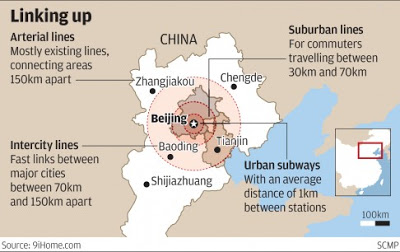
China is breaking the administrative barriers between Beijing-Tianjin-Hebei. This will enable coordinated development. Transportation, education, medical, economic, ecological services are moving towards integration in the cities which make up the 130M Jing-jin-ji megacity area.
Chinese megacities are associated with the greatest migration in human history, namely the movement of several 100M people from the countryside into urban areas. This has created over 100 cities with a population of more than 1M. And while Westerners tend to see only the harmful effects of that transformation, it’s gone fairly smoothly. Wages and living standards have risen to create the biggest rapid boost in prosperity the world has seen, ever. Surely it’s worth taking a closer look at that.
If you spend a few days in these places, they will stand out as quite distinct. To suggest otherwise is actually to repeat a common Western imperialist meme about the Chinese, namely that they “are all the same” in some underlying manner. Observing and understanding diversity is a skill, and the Chinese megacities are one of the best places for cultivating this capacity.
2018-07-03: Faster commutes are key for integration
It seems clear that China will continue to leverage technology to enable faster commuting within city regions.
more high-speed rail lines
robotic buses
robotic cars and ridesharing with high-speed roads and tunnels
ultra-fast elevators to commute from skyscraper to skyscraper and to speed the last 300 meters.
China will do what takes to get the potential 50% GDP boost from truly efficient 1-hour connections.
China is creating 19 supercity clusters by strengthening the links between existing urban centers. The supercities will have 800m people and more than 80% of the country’s GDP in 2030. 287m people have moved from low-income agriculture to higher-income city industries, the largest population transfer in history. Another 40m people will migrate to cities by 2020 and the productivity gap will have more than halved since 2000.
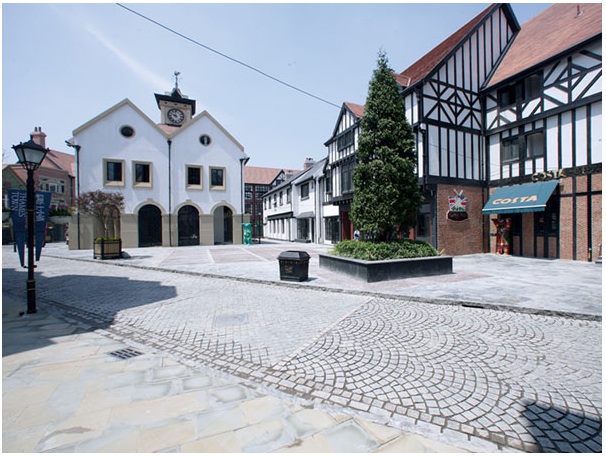
Shanghai urban planners are trying to preserve the center of the city by not building any more new highways, and by setting up 9 satellite cities, or “New Towns” far out in the Shanghai suburbs. But they need to attract people out of the city, into the outskirts–a tough job, unless you can create an atmosphere and lifestyle that one can’t find downtown. Thus the 9 theme cities, 7 based on the architecture of the UK, Italy, Germany, Spain, Sweden, Holland and Canada.
luring people to the burbs by turning them into disneylands
there is going to be lots of content to play with – there are 2B location attributes, 25M locations, 35K variables describing a set of locations, and 1500 unique datasets of information.
In a series of experiments on earthworms, scientists have identified PHA-4, which plays a critical role in prolonging life without tapping into insulin-regulating neural pathways that also control the aging process.
I bet they are partying over at SENS. 2007-08-13: The baby boomers don’t want to die, like all prior generations. but unlike them, they have the financial means to massively fund anti-aging research like SENS. This is only the very beginning. 2008-01-09: I wonder whether CR is compatible with evolutionary fitness. 2008-05-26: Intrinsic Pluripotency
We show that extrinsic stimuli are dispensable for the derivation, propagation and pluripotency of ES cells. The discovery has major implications for large scale production of specialized cells, such as brain, heart muscle and insulin producing cells, for future therapeutic use.
Prematurely aged (shortened) telomeres appears to be a common feature of iPS cells created by current pluripotency protocols. However, the spontaneous appearance of lines that express sufficient telomerase activity to extend telomere length may allow the reversal of developmental aging in human cells for use in regenerative medicine.
Injecting pluripotent cells into your blood stream can reverse aging effects. 2013-09-18: Google used to say, cheekily, that making search faster times billions of users saves lives, so doing anti aging seems like the logical next step. I also like this because it couldn’t be further from all the web 2.0 incrementalist nonsense most startups limit themselves to. 2014-06-13: Stem cell pills
I started taking Stem Cell 100 back in 2011. It is $60 for a 1 month supply. There is now Stem Cell 100+ [$75 for a 1 month supply]. They added more ingredients and the testimonials are that it acts faster and is more powerful and more people have noticeable positive changes.
Let’s face it – any other syndrome that caused the sorts of effects that age does on our bodies would be considered a plague. But we’re used to it, and it happens to everyone, and it happens slowly. Does it have to be that way? The history of medicine is a refusal to play the cards that we’ve been dealt, and there’s no reason to stop now.
the age of an organism, or an organ like the brain, is not written in stone. It is malleable. You can move it in 1 direction or the other. It’s almost mythological that something in young organisms can maintain youthfulness, and it’s probably true.
children of centenarians, who have a good chance of becoming centenarians themselves, maintained their telomeres at a “youthful” level corresponding to 60 years of age — even when they became 80 or older. Centenarian offspring also maintained lower levels of markers for chronic inflammation.
Almost any amount and type of physical activity may slow aging deep within our cells. And middle age may be a critical time to get the process rolling, at least by one common measure of cell aging.
Nearly 10 years of research showing that Rapamycin makes mice live up to 60% longer, scientists are trying it out as an anti-aging drug in dogs and humans. Researchers gave rapamycin to 16 dogs and imaged their hearts. “It started to function better. It started to look like a more youthful heart”. Those dogs took rapamycin for only 10 weeks.
The scientists identified that the metabolite NAD+, which is naturally present in every cell of our body, has a key role as a regulator in protein-to-protein interactions that control DNA repair. Treating mice with a NAD+ precursor, or “booster,” called NMN improved their cells’ ability to repair DNA damage caused by radiation exposure or old age. “The cells of the old mice were indistinguishable from the young mice, after just 1 week of treatment”. Human trials of NMN therapy will begin within 6 months. “This is the closest we are to a safe and effective anti-aging drug that’s perhaps only 3 to 5 years away from being on the market if the trials go well”
There is much to be optimistic about and the ideas proposed by SENS over 10 years ago and widely criticized are now being eagerly explored by researchers as it becomes ever more apparent that the aging processes are amenable to intervention. What was mocked just over 10 years ago is now becoming an accepted approach to treating age-related diseases as the result continue to mount up in support of a repair based approach to aging. However we still lack complete knowledge on several age-related damages to progress to clinical trials in humans.
Targeting multiple aging pathways has the potential to significantly reduce blood pressure and stress, while significantly increasing HDL Cholesterol levels and lung capacity. Targeting multiple critical aging pathways with a single dietary supplement is a novel alternative strategy to promote overall health.
“We have already done a bunch of trials in mice and we are doing some in dogs, and then we’ll move on to humans”. The US pet industry is a $72B-a-year market.
The prolongation of human lifespan is “the biggest thing that is going to happen in the 21st century. It’s going to make what Elon Musk is doing look fairly pedestrian.”
Rejuvenate Bio has met with investors and won a grant from the US Special Operations Command to look into “enhancement” of military dogs while Harvard is seeking a broad patent on genetic means of aging control in species including the “cow, pig, horse, cat, dog, rat, etc.”
The team hit on the idea of treating pets because proving that it’s possible to increase longevity in humans would take too long. “You don’t want to go to the FDA and say we extend life by 20 years. They’d say, ‘Great, come back in 20 years with the data’”.
Aubrey De Grey discusses how all of the aspects of fighting the damage of aging have reached an investable stage. 10 years ago only stem cells were investable. Now companies have been formed to attempt to counter all of the types of aging damage.
George Church talks about reversing human aging and claims they made mice live 2x as long. Organ longevity has also been done successfully with entire mice. If the body still did not get rid of the substandard cells then work at Oisin Biotechnology and others would enable bad cells to be cleared. Oisin is extending the life of mice and has proven safety and improvement in monkeys. They will start human clinical trials in 2019. Rejuvenate Bio has 60 aging reversal gene therapies. They have mentioned but not yet published eye popping results in mice. They are testing aging reversal in dogs in 2018-2019. Human treatments could be available on a general basis by 2025.
There is increasing of pharmaceutical company engagement via disease-focused proof of concept trials. Curing all cancers would add 3.5 years to average human lifespan. If anti-aging could delay the start of aging disease from 50 or 60 by 20 or 30 years then this could be 10x better than curing cancer. $50b per year is spent on curing cancer. If medical research was allocated based upon potential impact then anti-aging should be at a funding level of $500 billion per year.
His anti aging regimen is to activate pathways to improve the body’s defenses against aging. He is testing NMN on human subjects. He describes NMN is fuel for sirtuins. NMN is related to NR. NR increases the levels of NAD. Sirtuins need NAD to work. We lose NAD as we age. We have half of the NAD by the time we are 50. He takes a gram of NMN (Nicotinamide MonoNucleotide) and takes half a gram resveratrol in the morning with yogurt. He is personally taking 1 gram of Metformin once a day at night.
the evidence as it stands weakly supports the conclusion that CR modestly extends human life. We expect that an individual engaging in 20-30% CR versus a normative, non-obesogenic diet without malnutrition might enjoy a 10%-20% increase in longevity. A 10%-15% CR relative to a normative diet may increase lifespan by perhaps 5-10%.
The treated cells appeared to be ~3 years younger on average than untreated cells from elderly people, with peaks of 3 years (in skin cells) and 7 years (in cells that line blood vessels).
Sinclair’s focus in on analog information loss, the epigenetic noise that accumulates in the methylation patterns running along our DNA and disturbing its expression. This degradation is a biological clock of aging, and today’s results “tell us the clock doesn’t just represent time—it is time. If you wind the hands of the clock back, time also goes backward.”
“Harvard Medical School scientists have successfully restored vision in mice by turning back the clock on aged eye cells in the retina to recapture youthful gene function. The achievement represents the first successful attempt to reverse glaucoma-induced vision loss, rather than merely stem its progression
2020-12-04: Most brain aging decline can be fixed overnight
Common signs of neuronal aging disappeared literally overnight: neurons’ electrical activity became more sprightly and responsive to stimulation, and cells showed more robust connectivity with cells around them while also showing an ability to form stable connections with one another usually only seen in younger mice.
Avian longevity may be linked to special adaptations in the biology of birds—including proteins to operate their highly efficient metabolisms and their remarkable ways of processing oxygen—that prevent tissue damage commonly associated with old age. In many animals, high body temperature, metabolic rates, and blood glucose levels indicate a shorter lifespan because these systems damage DNA in the mitochondria. But compared to other animals, birds are very good at protecting their mitochondrial DNA from the cellular damage associated with aging, which could contribute to their extensive lifespans. Studying birds could enhance our understanding of aging in humans, too, leading to advances in human health. “We want to know how nature has constructed things that resist aging better than we do. Otherwise, we’re left to our own ingenuity.”
2023-01-29: Epigenetic clocks have become more accurate and more universal
“A pan-tissue clock was paradoxical because methylation is supposed to control cell identity,” and remains fixed through adulthood. When Horvath and his colleagues established that epigenetic clocks counted time at the same pace across all tissues, whether that was quickly dividing blood cells or notoriously slow and highly differentiated brain neurons, the race was on to understand the fabric of time that the clocks are measuring. The universal clock, the key finding of Horvath’s 2022 paper, takes the pan-tissue clock one step further. It chimed the final stroke that unequivocally showed a predictable pattern to aging not only within the body of a single organism, but across mammals. These are clocks that hopefully are comprised of cytosines that truly have a causative role in the aging process. Of particular interest are “enhancer” regions of the genome, which exaggerate the role of certain genes by activating them to exorbitant levels.
By the time of Obama’s official campaign announcement, Anthony’s Obama profile–which had the valuable url of myspace.com/barackobama–already had more than 30k friends, well more than the other contenders. Over the following weeks, it continued to grow at a rapid pace, generating lots of headlines about Obama winning the “MySpace primary.” Yesterday, the profile had just over 160k friends. Today, that url has only ~12K. And it’s under new ownership. Joe Anthony, one of the super volunteers of the Connected Age, has lost control of the page he started to the professionals on Obama’s staff.
obama staffers are just as clueless about the internet. not a good sign

 Gregor J. Rothfuss