i was quite impressed by this talk transcript by richard hamming. his observations over 40 years as to why so few with the potential for greatness deliver ring very true. some of the takeaways:
pick your battles. don’t fight ‘the system’ when you should be pursuing your goals instead: The appearance of conforming gets you a long way
knowledge and productivity are like compound interest. The more you know, the more you learn; the more you learn, the more you can do; the more you can do, the more the opportunity.
Plant the acorns from which the mighty oak trees grow, which could be redefined as don’t get trapped by your success
Pick an important problem where you have a reasonable attack
Communicate the relevance of your work to a wide audience outside your field
today, we went to the improv in cambridge, and sure enough, i ran into jason pratchett from somethingpositive. it’s eerie to run into a cast member of a comic strip you follow.
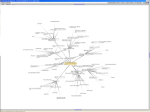
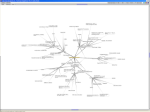
turns out there is a whole lot of overlap between various open source cms (or at least google thinks so, and touchgraph visualizes) ideally, OSCOM would be the intersection, and to some extent that is the case:
ever since i started using eclipse, i moved from language to tool maven. with every new eclipse build, i learn new tricks, and eclipse performance improves. one thing i did wrong for nearly 2 years until now was to get the SDK when i really want the platform plus JDT. the difference is nearly 50MB, 50MB that do have to be paged in and out of RAM. in the same vein, i just discovered the handy regexp tester plugin. good thing jonathan edwards is looking out for me 😉
sarah just sent me this, with a stern face: YOUR FRIEND OR CO-WORKER COULD BE A SPACE ALIEN … here’s how you can tell (by Michael Cassels of the “National Inquirer”) Many Americans live and work side by side with space aliens who look human -but you can spot these visitors by looking for certain tip-offs. They listed 10 signs to watch for: 1. Odd or mismatched clothes. “Often space aliens don’t fully understand the different styles, so they wear combinations that are in bad taste, such as checked pants with a striped shirt or a tuxedo jacket with blue jeans or sneakers,” noted Brad Steiger, a renowned UFO investigator and author.
OR, SAY, CLOTHES THAT DO NOT FIT PROPERLY AND ARE NOT MATCHED BY COLOR AND MAYBE THE PANTS ARE TOO SHORT OR DO NOT BUTTON
2. Strange diet or unusual eating habits. Space aliens might eat French fries with a spoon or gobble down large amounts of pills, the experts say.
YEAST. ALL OATMEAL ALL THE TIME.
3. Bizarre sense of humor. Space aliens who don’t understand earthly humor may laugh during a serious company training film or tell jokes that no one understands.
YOU MAKE MANY JOKES I DO NOT UNDERSTAND.
4. Takes frequent sick days. A space alien might need extra time off to “rejuvenate its energy”.
OR PERHAPS CANNOT WAKE UP EARLY AND MUST LIE ABOUT IN BED FOR HOURS BEFORE GETTING UP FOR WORK
5. Keeps a written or tape recorded diary. “Aliens are constantly gathering information.”.
ONE WORD: BLOG
6. Misuses everyday items. “A space alien may use correction fluid to paint its nails”.
GREGOR + HARDWARE = BAD SCENE
7. Constant questioning about customs of co-workers. Space aliens who are trying to learn about earth culture might ask questions that seem stupid. “For example, a co-worker may ask why so many Americans picnic on the Fourth of July,” noted Steiger.
WHY ARE AMERICANS SO FAT? WHY IS THE US GOVERNMENT SO STUPID? WHY DOES EVERYTHING CLOSE SO EARLY?
8. Secretive about personal life-style and home. “An alien won’t discuss domestic details or talk about what it does at night or on weekends”.
ONE WORD REVISITED: BLOG
9. Frequently talks to himself. “An alien may not be used to speaking as we do,so an alien may practice speaking,” Steiger noted.
PRETENDS TO BE SPEAKING A “SECOND LANGUAGE” SO SLIP UPS CAN BE EASILY EXPLAINED AWAY
10. Displays a change of mood or physical reaction when near certain high-tech hardware. “An alien may experience a mood change when a microwave oven is turned on”. The experts pointed out that a co-worker would have to display most if not all of these traits before you can positively identify him as a space alien.
EXPOSURE TO SHINY SOFTWARE INCREASES YOUR PULSE QUITE DRAMATICALLY
I am going to sell my story to the newspaper and then harvest your organs for our scientists to study.
2013-12-19: Over 100 years ago, archaeologists discovered a 2 ka old trash dump near Oxyrhynchus in Egypt, chock full of 1000s of ancient documents, and preserved by the desert and pure chance. From Wikipedia on Oxyrhynchus:
Because Egyptian society under the Greeks and Romans was governed bureaucratically, and because Oxyrhynchus was the capital of the 19th nome, the material at the Oxyrhynchus dumps included vast amounts of paper. Accounts, tax returns, census material, invoices, receipts, correspondence on administrative, military, religious, economic, and political matters, certificates and licenses of all kinds—all these were periodically cleaned out of government offices, put in wicker baskets, and dumped out in the desert. Private citizens added their own piles of unwanted paper. Because papyrus was expensive, paper was often reused: a document might have farm accounts on one side, and a student’s text of Homer on the other. The Oxyrhynchus Papyri, therefore, contained a complete record of the life of the town, and of the civilizations and empires of which the town was a part.
In the century since they were uncovered, only a small fraction of the 1000 briefcase-sized storage boxes of papyrus fragments have been edited and published. There are ongoing efforts to speed this up using multispectral imaging, high resolution CT scanning, and transcription by crowdsourcing.
2013-12-23: Using CT imaging at the micron instead of a millimeter scale to virtually unroll a scroll and bring the libraries of Herculaneum back to life.
However, unraveling was still a problem so scientists kept searching for a mechanism by which to examine the scrolls while they remained closed.
A computer science professor from the University of Kentucky thought he had the answer. Working with 2 preserved Herculaneum scrolls, Brent Seales used micro-CT imaging techniques to attempt to “virtually unroll a scroll.” Micro-CT works at a higher resolution than regular CT scans, operating on the much-smaller micron scale instead of a millimeter scale. Experiments on similar objects seemed promising.
Hundreds of papyrus rolls, buried by the eruption of Mount Vesuvius in 79 AD and belonging to the only library passed on from Antiquity, were discovered 260 years ago at Herculaneum. These carbonized papyri are extremely fragile and are inevitably damaged or destroyed in the process of trying to open them to read their contents. In recent years, new imaging techniques have been developed to read the texts without unwrapping the rolls. Until now, specialists have been unable to view the carbon-based ink of these papyri, even when they could penetrate the different layers of their spiral structure. Here for the first time, we show that X-ray phase-contrast tomography can reveal various letters hidden inside the precious papyri without unrolling them.
2022-03-09: Now combine this with ML to make sense of text fragments.
Ancient history relies on disciplines such as epigraphy—the study of inscribed texts known as inscriptions—for evidence of the thought, language, society and history of past civilizations. However, over the centuries, many inscriptions have been damaged to the point of illegibility, transported far from their original location and their date of writing is steeped in uncertainty. Here we present Ithaca, a deep neural network for the textual restoration, geographical attribution and chronological attribution of ancient Greek inscriptions. Ithaca is designed to assist and expand the historian’s workflow. The architecture of Ithaca focuses on collaboration, decision support and interpretability. While Ithaca alone achieves 62% accuracy when restoring damaged texts, the use of Ithaca by historians improved their accuracy from 25% to 72%, confirming the synergistic effect of this research tool. Ithaca can attribute inscriptions to their original location with an accuracy of 71% and can date them to less than 30 years of their ground-truth ranges, redating key texts of Classical Athens and contributing to topical debates in ancient history. This research shows how models such as Ithaca can unlock the cooperative potential between artificial intelligence and historians, transformationally impacting the way that we study and write about one of the most important periods in human history.
There would have been a great deal else. Literature, history, science. Epistolaries, miscellanies, essays. Memoirs, novels, biographies. Satires. The work of orators and poets. Philosophy and mathematics. Scientific studies and technical manuals. Dictionaries and encyclopedias; and more. For example, a prominent Latin collector near to Rome is likely to have had the epistolaries (published letter collections) of Cicero. While we already have copies of those, finding editions scribed within decades of his death would still be of considerable use. More importantly, medieval Christians chose not to preserve almost all ancient literature; so there could be epistolaries from other authors here, famous and obscure. And even poets and orators and novelists, besides being priceless to recover just in respect to the history of art, would also have commented on various subjects of importance, such as popular religion and events.
looks like 50% of the industry isfighting the complexity monster, while the other half is busy adding more. i hope this isn’t turning into a cultural revolution that throws away what we have learned, only to rediscover it later. i have spent the last few months refactoring an application that commits crimes in the name of simplicity (business logic in XSL anyone?) and have therefore a rather jaded view of ‘simple’. chances are, not 2 people will agree on what simple means.
a year ago, i wondered about the state of free knowledge creation. in the meantime, del.icio.us, flickr and foremost, wikipedia have brought infoware to a much broader audience. i have a keen interest in peer production, and i noticed recently how i am often too tired to contribute to open source projects, but end up slacking a bit and maintaining my del.icio.us account and other infoware bits instead. this makes me wonder if infoware with it’s immediate gratification and strong network effects will have a far deeper impact on the creation of societal wealth than open source ever will. the thought that more of that almost limitless source of energy (slacking) could be tapped.


 Gregor J. Rothfuss