after the sound system, now the projector. my roommate tells me we might have to redesign the living room a bit. i don’t really think we have the space for a home cinema, but whatever.
Month: November 2002
Open source spiel
I’m gonna give a talk about open source at the instituto de empresa in Madrid when I visit there next weekend. They are a leading spanish business school. Should be fun. I will probably focus on economical concepts as they relate to open source. Hopefully, I will be able to engage the crowd in an interesting discussion.
Dating Zoom
100s of millions are online. chose a random site, enter some data about yourself. site has 20M members. (zoom in 10e-1) narrow down these 20M to 100. (zoom in 10e-5) enter some more data, another power of 10 gone -> 10. notice a 93% correlation of character traits in 1 of these (another 10e-1 zoom). start a dialog. reveal information tit for tat. draw a physical perimeter of 100), 10), 2 kilometers, and narrow it down as you learn more. exchange more emails. on a whim, go out for a drink with that person. have a very nice chat. exercise for the reader: calculate the probabilities.
identity theft
while dubya claims to enhance security by fostering denunciation, the theft of identities continues unabated.
the government has failed to protect the voters from identity fraud, and instead protects only the banks and government bureaucrats
and don’t think it only happens in the us. companies everywhere are busily profiling their customers (in able to deliver personalized spam), and the notion that any data that is created through the activities of a person should be their property is foreign to them. maybe i should get a new face, and jump into the fray.
subtle communications
wanted to send an email today, and got back “exceeded storage allocation”. a clear indication that this person isn’t checking her inbox very often. what to do? calling is so 80s, not to mention that i consider calls increasingly rude. sms is the email of the disconnected, and only allows 255 characters. postal mail, finally, is far too serious and cumbersome these days. (i send maybe one postal mail in 6 months, only if i have too. its just such a hassle) why o why don’t people use efficient means of communication..
Communities & Commerce
I agreed to an interview with George Dafermos. I will answer the questions over the next several days.
It has been suggested that the process/technology of weblogs and collaborative filtering can be deployed for commercial purposes with a striking success. Most typical example is Amazon.com but others extend this line of argument to include websites/online communities such as slashdot.org since so many commercial products and services are discussed within the /. community every single day and we shouldn’t neglect the fact that the most efficient form of marketing is “word-of-mouth”. Essentially, the argument for personalization and mass customization systems on the Net suggests that the process of weblogs/social navigation/collaborative filtering will increase demand and stimulate impulse buying. Some people claim that such systems effectively restrain our ability to explore (limit our choices and eventually lead to a personal straitjacket – the apotheosis of shallow individual consumerism) whereas others point that the “community” on which these processes / technologies are dependent upon in order to blossom will ensure that our ability to explore enhances since there is always a certain degree of diversity among community members and thus, this is a process of cross-fertilization among ideas, opinions, market-customer needs/wants and commercial offerings. What is your opinion regarding the commercial (direct or indirect, forced top-down or emergent bottom-up) potential of such community processes/technologies?
Weblogs are the next step in transparency. Information about products, persons and causes is spreading ever faster, and weblogs allow clued-in individuals to contribute to the debate. The direct potential of weblogs / community filtering is that companies will increasingly find it valuable to talk to their customers with weblogs. This is a rather obvious consequence and has already begun. More indirectly, weblogs will greatly enhance the brand of me, or the extended resume. This leads to more interesting job offers, consulting gigs. Lastly, blogs will never work top-down, because most people suck at writing, and if they are mandated, the fun and intellectual curiosity is very likely gone.
In addition, what do you feel about the promise of e-CRM and personalization on the Net? Personalization technologies (or processes) such as collaborative filtering are the way forward and companies that deploy (most cited example is Amazon.com) them will reap substantial benefits. Last year I read in the Economist (UK) that ‘companies now also have the tools to exploit what they know about their existing customers’ Companies are starting to realize that they cannot offer the same quality of service to everyone. They know that the true promise of customer data is to help them to discriminate, in service quality and perhaps in price, and to target their services so that they give priority to the most profitable folk on their books. The way I see it, as far as the online community model and personalization dogma are concerned (sometimes they were one thing such as in the case of My Yahoo!), the rise of e-CRM is based on appreciating cross and up – selling opportunities and differentiating on price and service…what do you think? Should I also add targeted marketing and product/service customization to the above? Is e-CRM just a passing fad or we are simply witnessing the early stages of a wider revolution in commercial practices and is the “commercial online community” a step closer to real “personalization”?
I think the degree of personalization really depends on the product or service being offered. For some of them, personalization might mean that the offering itself is customized (levis jeans), while for other products the customer interaction is the part being personalized. Well-informed customers (and you can pretty much assume customers will be well-informed in the future) will take issue with differential pricing.
Great care has to be taken with differential pricing online as was shown when Amazon started offering lower prices to first time buyers. Word of this practice quickly spread and Amazon had to withdraw this approach
It appears to me that customers will increasingly place trust in recommendations by fellow customers, and will not heed the eCRM activities of vendors (unless these vendors adopt the language and tools of the community, and fit in). eCRM is a fad that brought us the horrors of call centers. The next step will be that a real conversation between employees (finally authorized to speak on behalf of their companies) and customers starts, and customers will begin to trust not anonymous companies, but rather the persons they interact with at these companies.
The business logic behind commerce-oriented online communities is that they most efficiently integrate communication, entertainment, interest and of course commerce. Therefore, for the sake of convenience and/or because shopping is a social activity for many or/and because we as consumers want to realize our collective power and form online communities in order to help fellow consumers that share our interests (ie. buying scifi books or Dylan records or whatever) and then some day even aggregate our purchasing power to get better deals, and so on. In your opinion, is the online community a viable business model? And do we really want to deal with other people when buying staff online? Philip Kaplan (or Pud of fuckedcompany.com) argues that we shop online in order to evade the social activity that shopping many times is. Is the mantra “online social interaction helps bring profits” just a myth?
It is a myth if it is assumed that people will mingle on some dull shopping portal. They won’t. companies cannot force communities to evolve in the near term, all they can do is to offer enough interesting material and access to the minds behind the firewall to help communities grow. The impact of a specific community on sales and profits is very unlikely to be directly attributable. I’m a fickle buyer, for instance, and will google intensely before I make a purchase (which usually reveals the pros & cons of a product quite nicely). Those google hits were likely produced by some sort of community, but not necessarily the one a company had in its crosshairs.
We witness so many companies that boast their being a community (ironically most of the times it means adding a mailing list or chat to a website) while “community” admittedly serves as a catchphrase to lure advertisers to a website. Even efforts that were backed by visionaries of the Rheingold/Electric Minds type failed to become economically sustainable.
And there are so many accounts on why community and commerce are incompatible. Some refer to Geocities, other point to AOL’s community leaders program that backfired…so many stories (on the other hand, there are so many papers which say the opposite). Do you think that online communities and commercial practices are a bad fit, an ill-fated attempt to capitalize on the Net’s ability to enhance our social reach and enrich our communication space and relationships?
As I outlined before, closed communities around a brand or a vendor are destined to fail. The net is much too volatile, and its members too suspicious to make it work. Communities are increasingly nomadic as the cost of expressing oneself, finding like-minded people, and forming social ties becomes negligible. Centrally hosted communities are a relict of a time when community technology was scarce, and expensive servers needed to bring people together. These days, people are far more likely to flock together at a moments notice in smart mobs. So yes, the community business models of old are doomed. But new ones emerge to take their place.
UPDATE
George rightly pointed out a fallacy with my smart mobs example. I’m not saying smart mobs is the future, I just wanted to take the speed at which they form as an example. (haven’t read the book either 🙂 And yeah, text messaging is boring 🙂
There are increasing signs that the demise of the advertising – based revenue model (especially as far as the portal-centric online community is concerned) is imminent. What in your view can provide an alternative sustainable revenue model? Subscriptions? Or something else?
There is no one-size-fits-all revenue model. It makes a large difference if your audience is cattle (passive, low income, not terribly smart individuals) or readers that are actually co-writers. If you have smart readers, open up a 2-way channel, and you will probably get much valuable advice to make it worth your while. In the context of a newspaper, you could segregate the audience into contributors (who get the content for free, but contribute in a measurable way) and consumers, who pay for content (targeted advertising, subscriptions etc). To really leverage contributions requires advances in content aggregation, annotation, trust models and proper crediting. Surely the semantic web can help? 🙂
Spreading the word
Today i got a very cool job offer from a finnish company doing embedded systems. They had read my thesis and wanted to hire me to “put your name up there with the Linus Torvald’s of the world.” huh! i’m flattered. Too bad i already work for wyona..
Also, an interview request (the 6th this year), and a very good pointer to spread my thesis even further. I love the net.
Isaac applies for the Darwin Award
<isaac> i stapled my hand once
<isaac> or was that my leg
<isaac> i don’t remember anymore
<isaac> no it was my leg
<isaac> electric staple gun
<miko> is that better or worse than the head?
<Section> lol
<isaac> i was resting it against my leg
<isaac> and grabbed it like a gun
<isaac> and bam bam bam
<miko> oops
<isaac> 3 staples in my leg
<Section> lol
<Section> ouch
<isaac> so i unplugged it
<isaac> threw it across the room
<Section> the big industrial staples?
<gregor> im not sure if your kidding or not
<isaac> and pulled the staples
<gregor> who knows
<isaac> no i’m not kidding
<gregor> LOL
<isaac> 3/8 inch long staples
<Section> ouch
<isaac> regular shop usage staples
<isaac> i was not a happy camper
<Section> i should think not
<isaac> but i was lucky
<isaac> it went into a chunk of fatty area
<isaac> so not much blood
Forgers or thugs
huggers or frost
frog resorts hug
shorter fog rugs
hot surfers grog
terrors gush fog
forest grog rush
forger hosts rug
foster grog rush
others surf grog
retro fog shrugs
fresh grogs tour
Space exploration
Against Human space exploration
It is true that science can be done in the space station. But science can also be done dressed in a clown suit atop a large Ferris wheel. The argument ought to be over where is the best place for it. Performing experiments in microgravity does not require a $100B platform. Moreover, much of the work that can genuinely be done only on the station is justified through another magnificently circular leap of logic. Research into the effects of microgravity on human health and the growth of soybeans, for instance, is useful only in the context of a manned mission to Mars.
It doesn’t pay to lift humans out of earth’s gravity well. Billions each year could instead be spent on research and development for cheaper transport options, spurring the advent of a commercial space industry.
2006-10-24: Our Non-Expeditions to the Moon and Mars
President Bush is right. The space shuttle and the space station deserve termination. The true heart of his proposal is the elimination of these programs, and the substitution of robotic exploration.
2007-01-28: Space for Survival
Space exploration is fundamentally about the survival of the species, about ensuring better odds for our survival through the promulgation of the human species. But as we do it, we will also ensure the prosperity of our species in the economic sense, in a 1000 ways.
NASA is starting to take extinction events seriously and arguing for space missions as a hedge. About time.
2007-06-06: Future of NASA
Reducing the cost of space access is now being addressed by the private sector. NASA is now acting as a responsible potential customer of commercial launch services (COTS). The government has a poor record competing with the private sector in the arena of cost effectiveness. NASA spent many years and billions of dollars in pursuit of next generation launch technologies, with limited success. NASA has now wisely chosen to provide a market with exploration programs and to permit private enterprise to have a crack at making that affordable. In the meantime NASA is developing the Ares family of launch vehicles to provide the capabilities it requires to initiate the human exploration program until the market is able to offer cheaper alternatives. As for the International Space Station (ISS), it is essential that we learn how to truly live and work in space – not just pay visits. ISS is a vital international laboratory for learning how to build, live aboard, maintain, and operate a complex vehicle in space. The same is true for a lunar base that enables us to use the resources of space and assists our education in how to reach Mars. As for favored contractors, the COTS program and the market established by exploration will open new venues for many companies and communities around the world to participate.
nasa’s reply to allegations of suckiness by wired et al
2010-05-15: The New Space Frontier
Today, the President will articulate an ambitious and exciting new plan that will alter our destiny as a species. I believe this address could be as important as President Kennedy’s 1962 speech at Rice University. For the first time since Apollo, our country will have a plan for space exploration that inspires and excites all who look to the stars. Even more important, it will work.
NASA finally creates a real space industry. You know, with competition and stuff.
2012-03-03: Space exploration future .Beyond on a related note, getting into AMNH early without all the crowds makes it twice as awesome.











2012-05-27: Mars Drive
The reference mission design of the MarsDrive Consortium is discussed, which has been created to facilitate exploration of the red planet through methods that are both realizable and cost-sustainable with existing technology. This mission plan—known as Mars for Less—is predicated on the use of existing medium-lift launch vehicles. In this architecture, 25-ton propulsion stages are placed individually in low-Earth orbit, where they are mated to Mars-bound payloads and ignited at successive perigees to execute trans-Mars injection. Spacecraft follow conjunction-class trajectories to the red planet and utilize aerodynamic methods for orbital capture and descent. Return vehicles are fueled with methane/oxygen bipropellant synthesized primarily from Martian resources. Dispatching expeditions from orbit with individual, high energy stages—rather than directly from the Earth’s surface—allows for the division of mission mass into more manageable components, which can be launched by vehicles that exist today. This plan does not require the development of heavy-lift launch technology: an effective yet costly proposition that may otherwise hinder current space exploration initiatives. Without the need for heavy-lift boosters, piloted missions to Mars may be undertaken presently, and within the capabilities of private initiatives. It is argued that the mission design herein represents a more viable method of conducting early human Mars exploration than proposals which require heavy-lift launch vehicles—an alternative method by which the red planet can be opened to humanity.
Between the safety fetish and cover your ass problems with government funded spaceflight, private companies have a 100x cost advantage. What flag will they plant in the regolith?
Here is one such proposal
2013-02-27: Going to Mars in 2018? This will be the most awe-inspiring and profound event this quarter-century.
Inspiration Mars Foundation believes in the exploration of space as a catalyst for growth, national prosperity, knowledge and global leadership. History has shown that strong nations reap these benefits when they boldly follow a path rooted in curiosity and guided by technological innovation. In 2018, the planets will literally align, offering a unique orbit opportunity to travel to Mars and back to Earth in only 501 days. Inspiration Mars is committed to sending a 2-person American crew – a man and a woman – on an historic journey to fly within 160 km around the Red Planet and return to Earth safely.
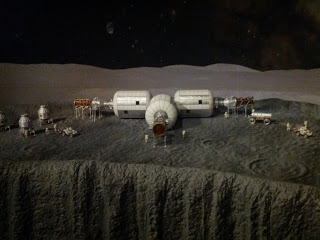
2013-03-12: Mars Research Station. I salute this effort. Very often, things look silly to our eyes that become crucial for humanity later on.
In the vast open spaces of southern Utah, Reuters photographer Jim Urquhart recently paid a visit to the Mars Desert Research Station (MDRS). Built and operated by a space advocacy group called the Mars Society, the research facility is investigating the feasibility of human exploration of Mars, using the Utah desert’s Mars-like terrain to simulate working conditions on the red planet. Since 2000, more than 100 small crews have served 2-week rotations in the MDRS, conducting research in an on-site greenhouse, observatory, engineering area, and living space. Urquhart was able to accompany members of the Crew 125 EuroMoonMars B mission inside the MDRS facility, and on a simulated trip to collect Martian geological samples.
2014-02-18: Indian Mars Exploration. India’s Mars mission is 9x cheaper than a similar NASA one. I hope they succeed and put another nail into the coffin of bloated military-industrial complex projects.
While India’s recent launch of a spacecraft to Mars was a remarkable feat in its own right, it is the $75m mission’s thrifty approach to time, money and materials that is getting attention.
2014-10-31: Exploration is sacrifice, and we’d best re-learn that lesson.
I would like to share my deepest personal thoughts on today’s Virgin Galactic Accident. As you know, this is deeply meaningful to me, my family and friends.
Today, most importantly, my heart goes out to those who have lost loved ones, and the many at Virgin Galactic, Scaled Composites, the Virgin Group and the Mojave Spaceport who this accident deeply affects.
I urge all of us to keep something in mind. We are on the verge of opening the space frontier, one of the greatest endeavors of our species.
Many Americans forget that 500 years ago 1000s of European gave their lives to open the Americas, and 200 years ago, the early American’s risked their lives to open the west. This is what exploring is all about. We risk our lives for what we believe in. This is the American way, the explorer’s way.
I for one, am proud to be a Virgin Galactic client. I believe in the company, and know, without a doubt, that they will succeed, and I will fully trust them with my safety when my turn to fly materializes.
2014-12-15: No More Space Race
A far cry from the fierce Cold War Space Race between the US and the Soviet Union, exploration in the 21st century is likely to be a far more globally collaborative project. This spirit of trans-border ownership and investment seems set to continue. One key part of this is the Global Exploration Roadmap, an effort between space agencies like NASA, France’s Centre National d’Etudes Spatiales, the Canadian Space Agency, and the Japan Aerospace Exploration Agency, among many others, that is intended to aid joint projects from the International Space Station to expeditions to the Moon and near-Earth asteroids—and to reach Mars. On a recent trip to India’s space agency, Stofan recounted to me, she met with many Indian engineers who were just as excited as the Americans to get scientists up there, not only to explore, but also to begin nailing down the question of whether there was ever life on the red planet. It’s also clear that the next stage of space exploration will not only be more global, but will equally involve greater private and public partnerships. Companies like Space X are increasingly involved in NASA’s day-to-day operations
2015-02-03: The caveman in space
At 61, Dr Stone appreciates the limits of human exploration. 23 of his friends lost their lives on expeditions and he has personally recovered 7 bodies. Now Stone Aerospace is developing a team of robots to hunt for microbial life on Europa. The discovery of Europan life would, Dr Stone reckons, be “a pretty good contender” for one of the most momentous events in human history. That might satisfy most explorers, but not Dr Stone. He has founded the Shackleton Energy Company to process water on the Moon into oxygen and hydrogen for rocket fuel.
2018-03-27: NEO Manned missions
The possibility of applying the Space-X Falcon-Heavy booster to human exploration of the inner solar system is discussed. A human-rated Dragon command module and an inflatable habitat module would house and support the 2-4 person crew during a ~1 year interplanetary venture. To minimize effects of galactic cosmic rays, older astronauts should conduct the mission during Solar Maximum. Crew life support is discussed as is application of a ~1-km square solar photon sail. The sail would be applied to rendezvous with the destination Near Earth Object (NEO) and to accelerate the spacecraft on its return to Earth. An on-line NASA trajectory browser has been used to examine optimized trajectories and destinations during 2025-2026. A suitable destination with well established solar-orbital parameters is Asteroid 2009 HC.
 Gregor J. Rothfuss
